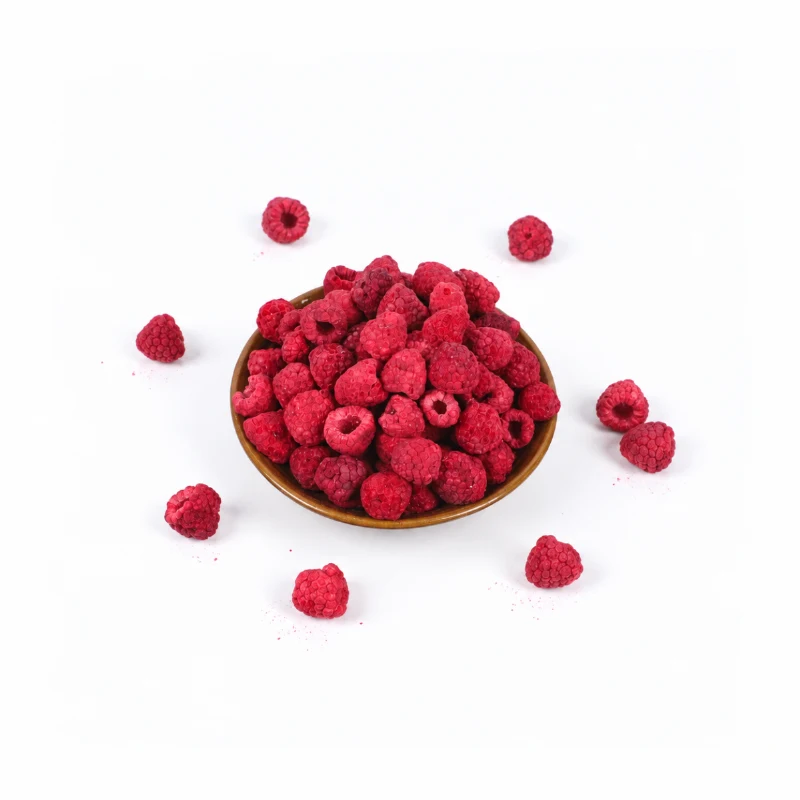
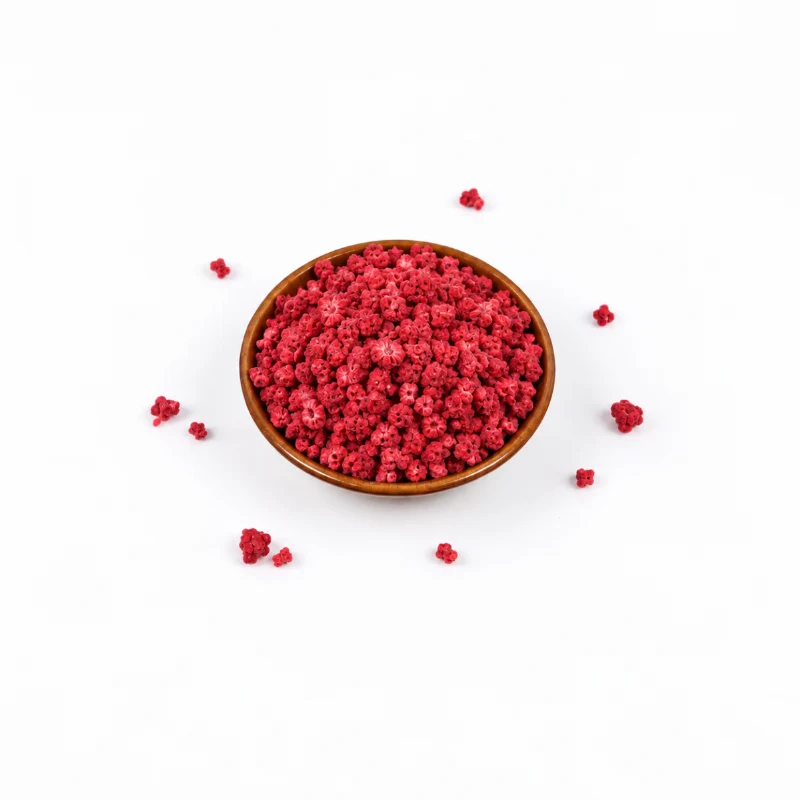
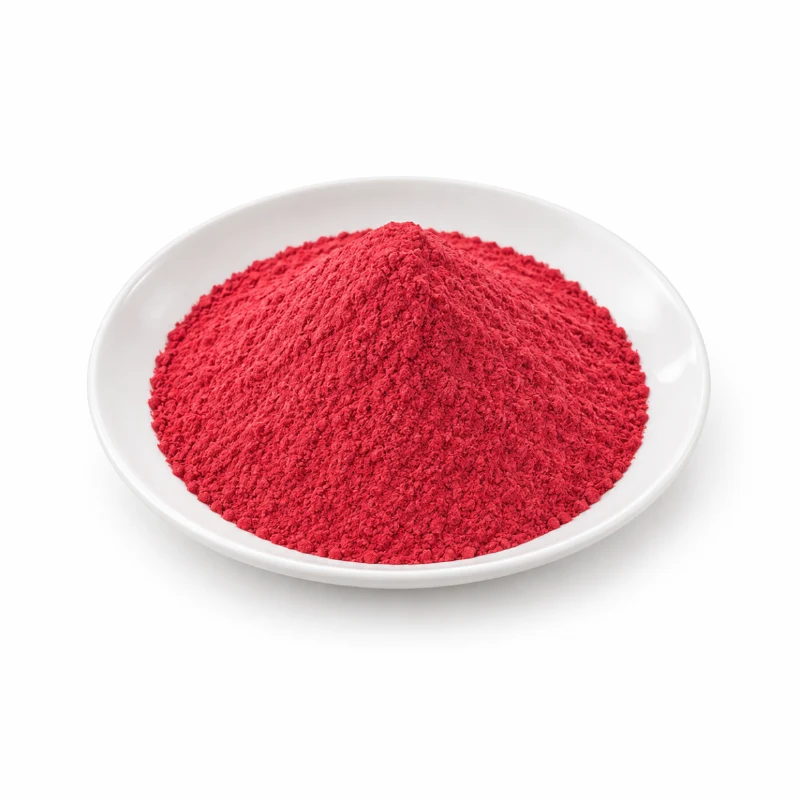
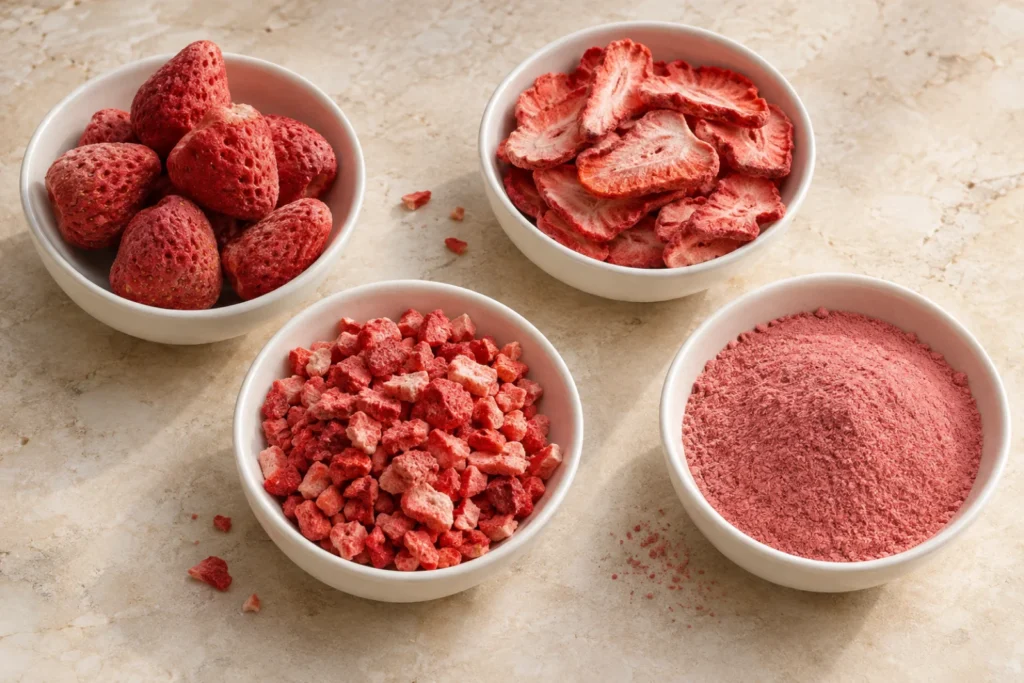
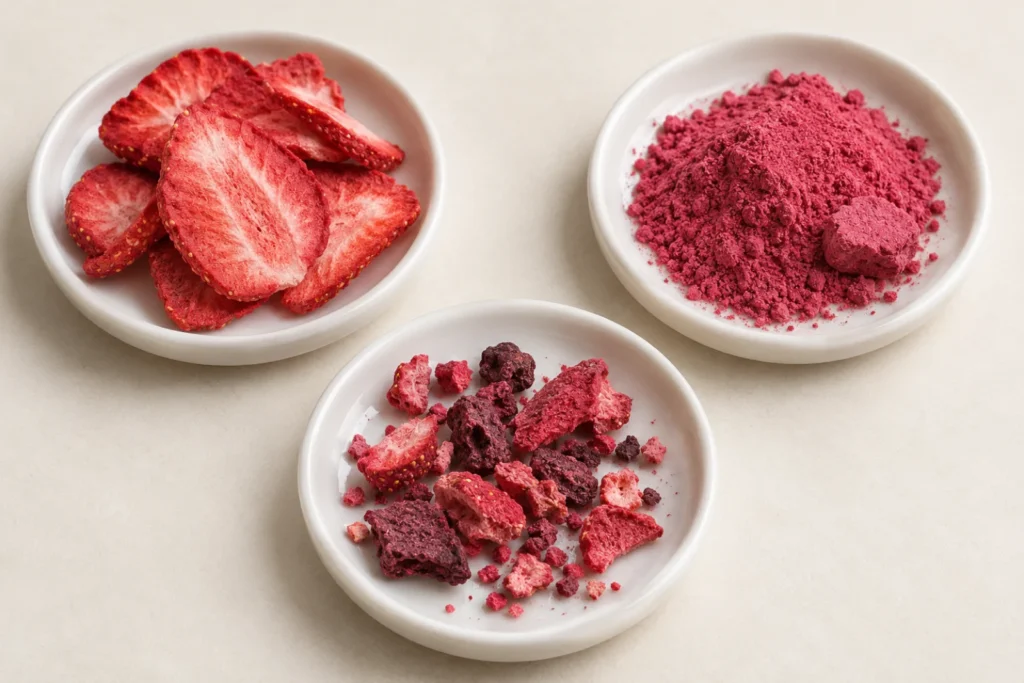
Freeze-dried raspberry can bring a tart berry flavour, red fruit colour and a light texture to food formulations. Its delicate structure also makes handling an important purchasing consideration. Whole berries, crumble and powder should be evaluated as different ingredient formats rather than interchangeable grades.
The most useful starting point is the finished product: whether the raspberry needs to remain visible, distribute through a blend or flavour a filling determines what to sample.
Match the raspberry format to the process
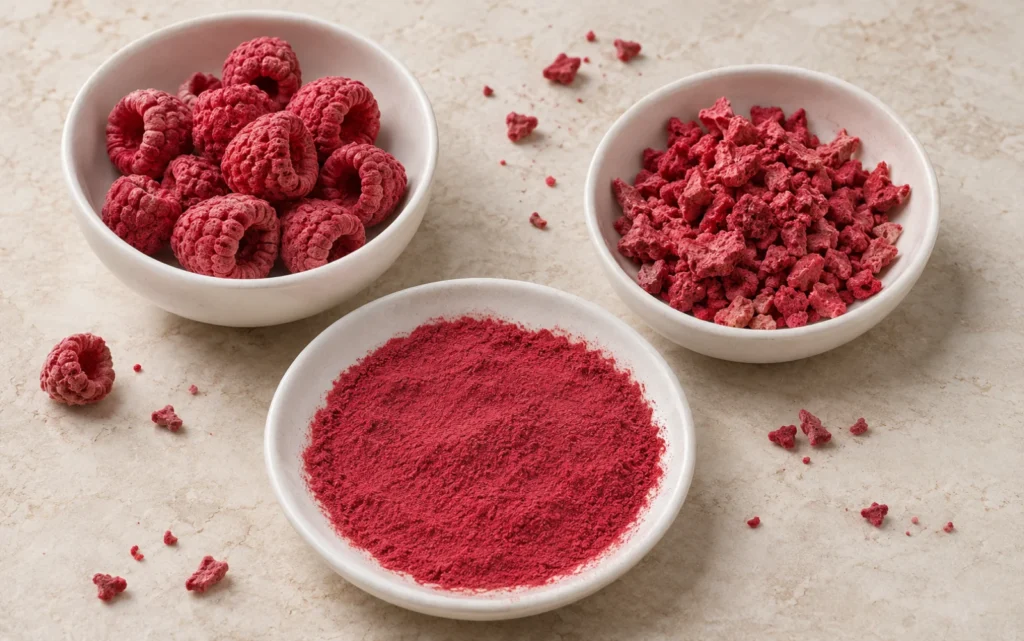
Whole raspberries can provide recognisable fruit shape in snacks, toppings and coated products. Ask how intact-berry content is defined and measured, and inspect samples after a representative handling or shipping trial. The condition on arrival matters as much as the condition before dispatch.
Crumble and pieces can suit cereal mixes, chocolate inclusions and bars where even distribution matters more than whole-berry appearance. Specify a particle-size range and permitted fines. Smaller particles may fit a recipe better, but they can still generate dust or break further during mixing.
Powder contributes flavour and colour throughout a recipe. Confirm whether it is milled whole fruit or a different type of raspberry ingredient. Whole-fruit powder commonly includes seeds unless a separate seed-removal process is specified; this can affect mouthfeel in drinks, creams and smooth fillings.
Evaluate tartness at the intended inclusion rate
Raspberry's flavour can contrast with sweet chocolate or cereal. The balance depends on the raw material and the complete formulation. Test it at the proposed addition rate rather than selecting the sample with the strongest dry-fruit flavour.
For a chocolate application, assess the coated or mixed product after storage. For bakery, compare when the fruit is added: before baking, in a filling or as a decoration after cooling. Heat and contact with moisture can change flavour, colour and texture. Freeze-dried raspberry should not be assumed to keep its original appearance through every baking process.
Set acceptance criteria for fragile fruit
Useful commercial requirements include:
- Format, dimensions and the agreed proportion of intact pieces.
- Fine-material limit and the sieve or inspection method used.
- Sensory reference, including tartness and any unacceptable off-notes.
- Moisture, water activity and packaging requirements.
- Ingredient declaration, traceability and agreed safety documentation.
Agree how samples will be taken from bulk packs. An attractive handful selected from the top of a carton may not represent the whole consignment. Where repeatability matters, compare samples and records from more than one production lot.
Manage moisture exposure during production
The porous fruit can soften after absorbing water from humid air or other ingredients. Keep open-pack exposure controlled and establish a practical resealing or use-up procedure.
In mixed foods, water activity differences can drive moisture movement. No single incoming moisture value guarantees lasting crunch. Confirm the finished-product shelf life with its actual recipe, packaging and expected storage conditions.
Frequently asked questions
Is crumble lower-quality raspberry?
Not necessarily. It may be a deliberately specified format. Its suitability depends on raw-material quality, size distribution, composition and performance in the application.
Is freeze-dried raspberry powder seedless?
Do not assume so. Ask for the ingredient specification and test the sample's texture in the intended recipe.
Does freeze-drying preserve all raspberry aroma?
No process guarantees complete aroma retention. Raw-material condition, processing and storage all affect the flavour delivered to the customer.
Request samples for a raspberry application
Tell TIANQIN whether the fruit will be coated, blended, baked or used in a filling. Include the preferred format, target market and estimated volume so available options can be discussed.