Chocolate-covered freeze-dried fruit combines a smooth coating with fruit flavour and a light interior. For manufacturers, the development task is to choose fruit that suits the coating process and retains an acceptable eating texture during the intended shelf life.
Whole coated berries, fruit-topped chocolate bark and pieces blended into chocolate bars need different specifications. A visually attractive dry sample is only the first stage of evaluation.
Choose the fruit around flavour and geometry
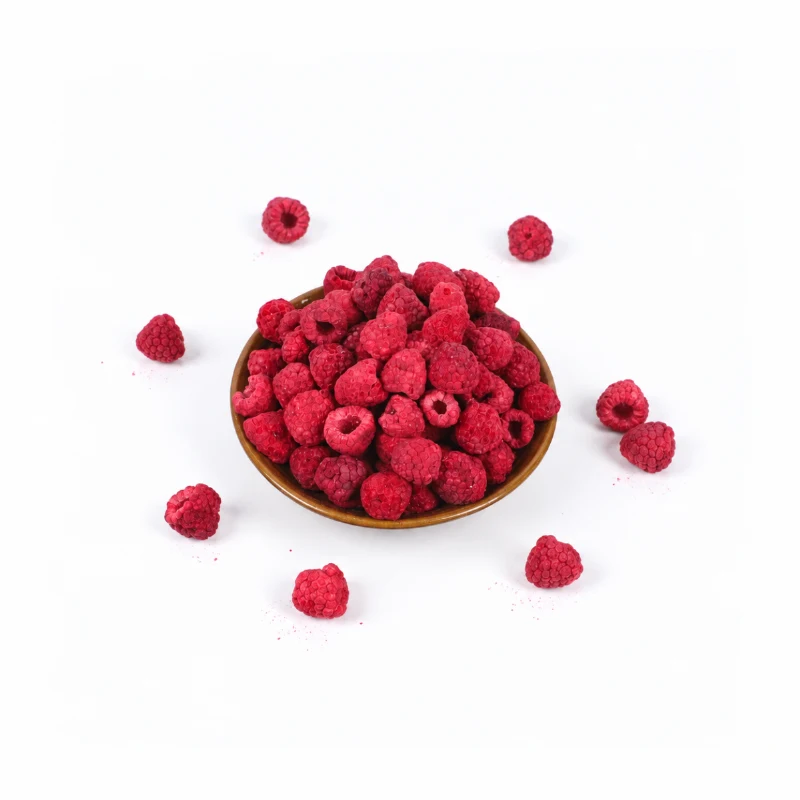
Strawberry and raspberry can provide tartness against sweet chocolate. Blueberry, banana and tropical fruits offer other flavour directions. Compare each at the planned fruit-to-chocolate ratio; the coating can change how strongly the fruit is perceived.
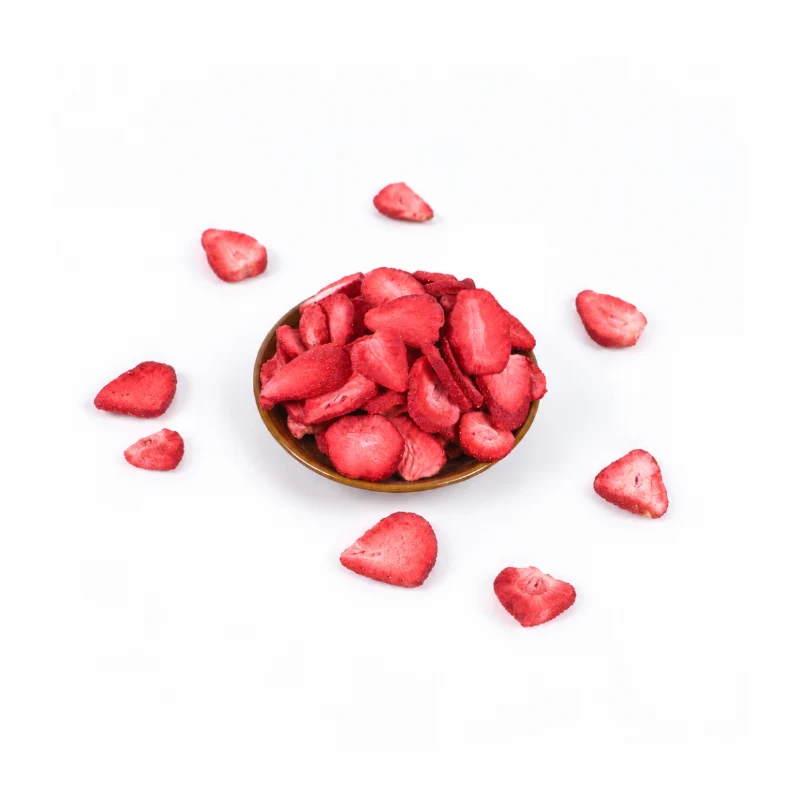
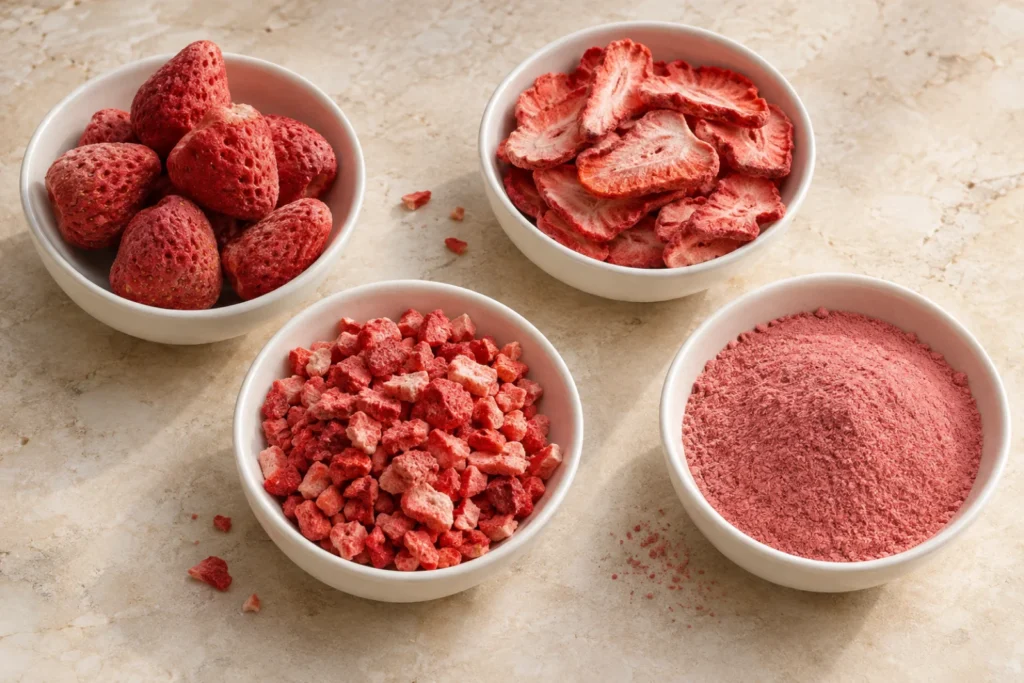
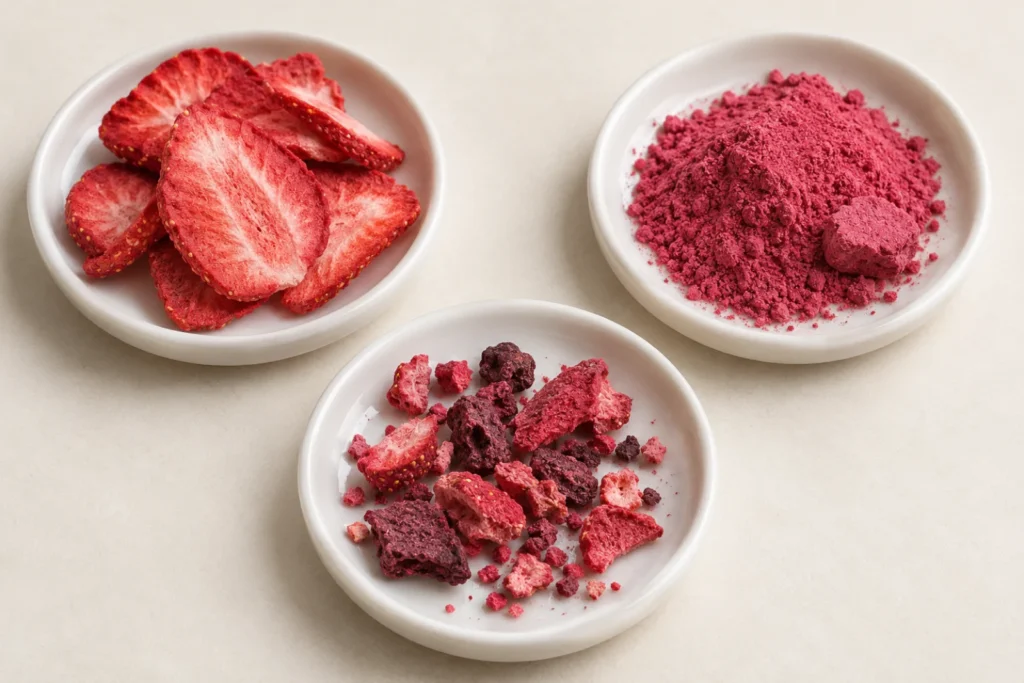
For whole coated fruit, assess size range, shape, cavities and breakage. For bars and clusters, smaller pieces may fit the product dimensions and distribute more conveniently. Slices can work as visible decorations, provided they survive placement, packing and transport.
Powders can contribute flavour and colour to some confectionery components, but their effects on texture and processing need trials. Seeds, fibre and particle size can matter in a smooth filling or coating.
Test the actual coating process
Fruit can break during feeding, tumbling or transfer. Run a representative trial using the intended equipment and operating conditions. Record fine-material generation, coating pickup, coverage, finished size and usable yield.
Check whether fruit fragments or powder interfere with coating consistency. A process that works for a dense centre may need adjustment for a porous, fragile berry. Agree acceptable breakage in the incoming ingredient and in the finished product as separate criteria.
Manage moisture and diagnose bloom correctly
Freeze-dried fruit can absorb moisture from air or surrounding ingredients, changing its texture. A low starting moisture or water activity does not guarantee lasting crunch and does not eliminate moisture movement within a mixed product.
Chocolate appearance problems also have different causes. Moisture can contribute to sugar bloom; fat bloom relates to changes in the fat structure and can be influenced by tempering and storage. They should not be described as the same moisture-driven defect. Callebaut guidance on chocolate bloom.
Control open-pack exposure and assess cooling, packing and storage together. A chocolate layer should not be assumed to provide a complete moisture barrier around the fruit.
Validate the packaged product
Use the intended retail pack and realistic distribution conditions. Assess flavour, fruit texture, coating appearance, breakage and seal integrity throughout the proposed shelf life.
Keep the ingredient's shelf-life statement separate from the finished confectionery shelf life. The fruit, coating, process and packaging form a new product that needs its own assessment.
For raw-material approval, confirm composition, dimensions, moisture, water activity, traceability and relevant food safety documentation. Any allergen-related statement about the finished confectionery must consider the chocolate, other ingredients and manufacturing environment as well as the fruit.
Frequently asked questions
Are freeze-dried fruits guaranteed to stay crunchy in chocolate?
No. Retention of crunch depends on the complete product and storage conditions. Verify it through trials.
Does this article describe a ready-made coated product?
The selection guidance concerns fruit ingredients for confectionery manufacture. Confirm separately whether a supplier offers finished coated products or ingredient supply only.
Is whole fruit always the best option?
No. Whole fruit prioritises visible shape, while pieces or slices may better suit the equipment, product size or recipe.
Discuss fruit for a chocolate project
Send TIANQIN the fruit preference, coating method, target finished size, market and estimated ingredient volume. Ask which available fruit formats could be evaluated in your process.