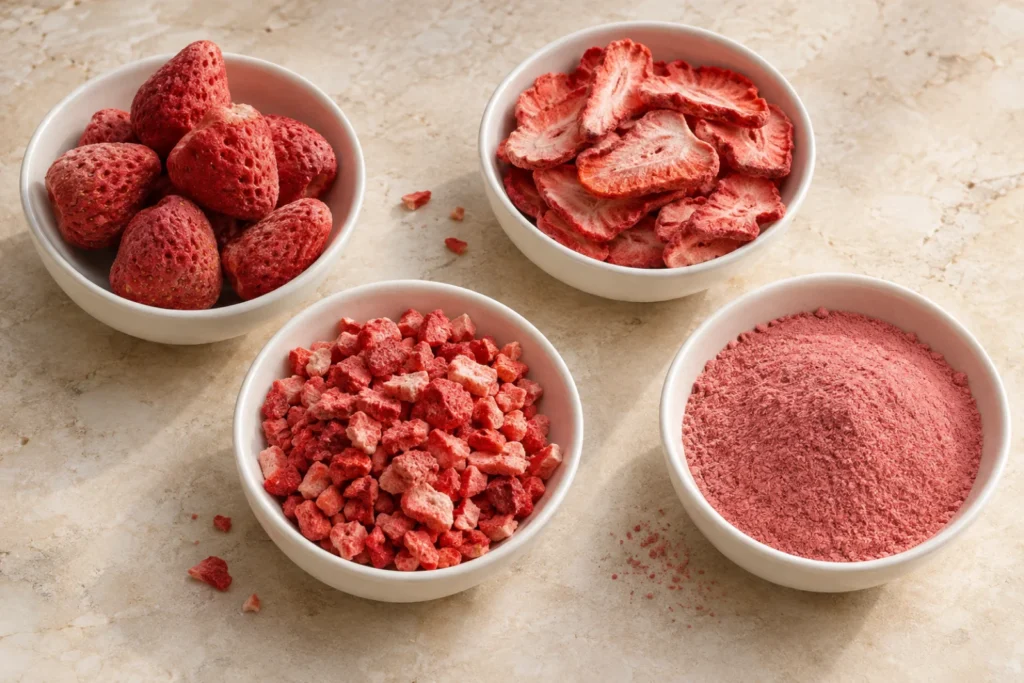
Year-round availability of a freeze-dried fruit ingredient depends on more than the harvest date. Suppliers may combine fresh-crop purchasing, frozen raw-material inventory, drying schedules and finished-goods stocks. Each stage has its own capacity and quality considerations.
For a food manufacturer, the practical task is to connect the demand forecast with the supplier's actual sourcing and production plan. A seasonal calendar is useful context, but it does not reserve stock or production time.
Build a calendar for the actual sourcing region
Harvest windows differ by fruit, variety, location and growing conditions. A generic statement such as “strawberries are harvested in spring” is too broad for an international purchasing plan.
Ask which origins and crop periods are proposed for your specification. Confirm whether a change of origin or variety requires approval. If alternatives are acceptable, evaluate them early enough to avoid an untested substitution during a shortage.
Include the time needed for incoming inspection, preparation, drying, testing, packing and transport. Work backwards from the date the ingredient must be available on your line, rather than treating the shipping date as the end of the plan.
Understand what inventory is being held
Frozen prepared fruit, unallocated finished stock and finished goods reserved for a buyer are different forms of availability. Ask which one supports the proposed delivery programme.
Where frozen raw material is used, discuss storage conditions, lot identification, permitted storage duration and quality checks before processing. Storage and freezing methods should match the product. The existence of a large cold store alone does not establish adequate inventory, acceptable quality or stock reserved for your orders.
For finished ingredients, confirm remaining shelf life at dispatch and on receipt. Earlier production may improve delivery availability while reducing the shelf-life period available to the buyer.
Share a forecast with clear commitment levels
Provide expected consumption by fruit and format, peak periods and planned launches. Separate a planning forecast from a firm purchase commitment so both parties understand what has actually been ordered.
A useful supply discussion covers:
- Expected annual and monthly requirements.
- A realistic order-confirmation window.
- Raw-material and finished-stock reservation arrangements.
- Production slots and batch-release timing.
- Shipment quantities and remaining shelf life.
- Escalation contacts when the plan changes.
Review the plan when demand or crop availability changes. Forecast sharing can improve coordination, but it cannot guarantee that all later requirements will be supplied.
Agree the commercial response to disruption
Discuss what happens if the proposed crop fails the specification, demand exceeds the forecast or transport is delayed. Possible responses include a revised schedule, an approved alternative origin or a different pack arrangement. Each needs to remain compatible with the buyer's product requirements.
For longer supply agreements, specify which price and volume terms are fixed and which can change. Also agree stock ownership, release schedules, payment arrangements and how unused reserved material will be handled. Avoid treating an annual agreement as an unconditional guarantee of fixed cost and delivery.
Frequently asked questions
Does year-round supply mean year-round harvesting?
No. Supply may rely on stored raw material, finished inventory or multiple sourcing regions. Ask which model applies to the product you are buying.
Is the largest stockholding always the safest option?
No. Relevant stock quality, age, allocation, storage controls and available drying capacity matter alongside quantity.
Start a supply-planning discussion
Send TIANQIN a forecast by fruit, format and required delivery period. Ask how current sourcing, production and inventory options could support the programme, and confirm the agreed arrangements in writing.