A promising sample deserves a structured trial. Tasting an ingredient directly from the bag answers one question; testing it in a recipe answers several more. The following worksheet approach helps a development team explain what worked, what changed and what needs another trial.
Write the acceptance criteria first
Choose three or four observations that matter to the concept. Examples include the amount of visible fruit, texture at serving, colour of the base and ease of portioning. Describe the desired result in ordinary language and take a reference photograph. Avoid changing the criteria simply because a particular sample is available.
Keep an unmodified version of the base recipe as a comparison. Prepare small, clearly labelled trials and change one factor at a time: format, addition rate or point of addition. Record weighed quantities so the preferred result can be repeated.
Ask different questions in different applications
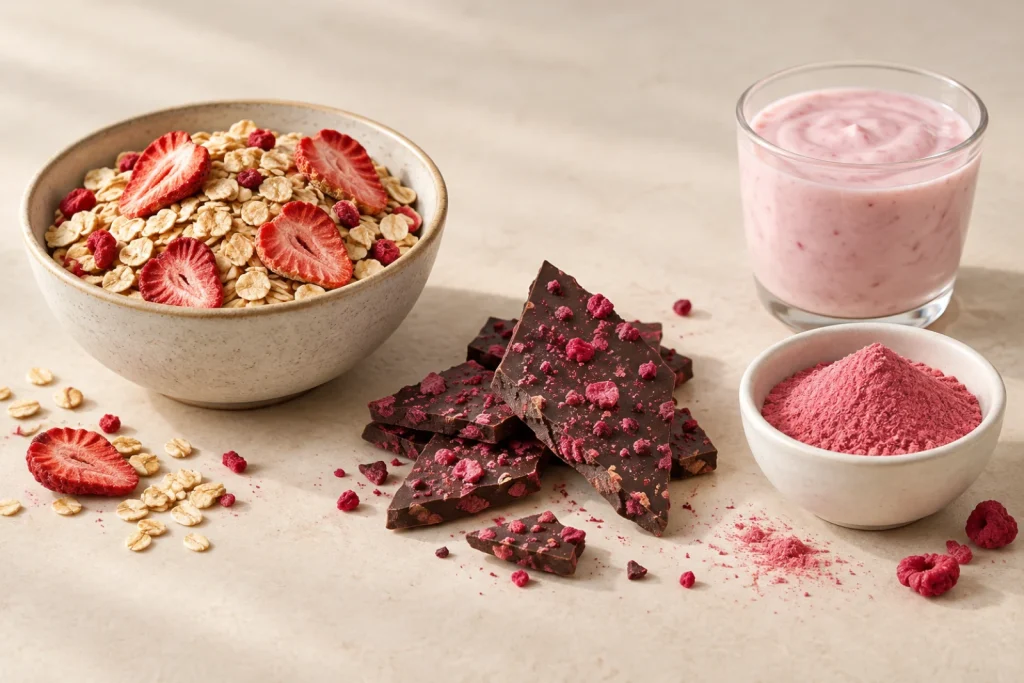
Cereal: inspect the dry mix, then prepare a normal serving with milk or yogurt. Record fruit distribution and texture at the times that reflect how the product will be eaten. Examine the bottom of the pack as well as the top when assessing a mixed sample.
Chocolate: compare the visible fruit on the surface and in a broken section. Record how pieces tolerate mixing and depositing. Evaluate the actual finished chocolate, rather than relying on the appearance of fruit before incorporation.
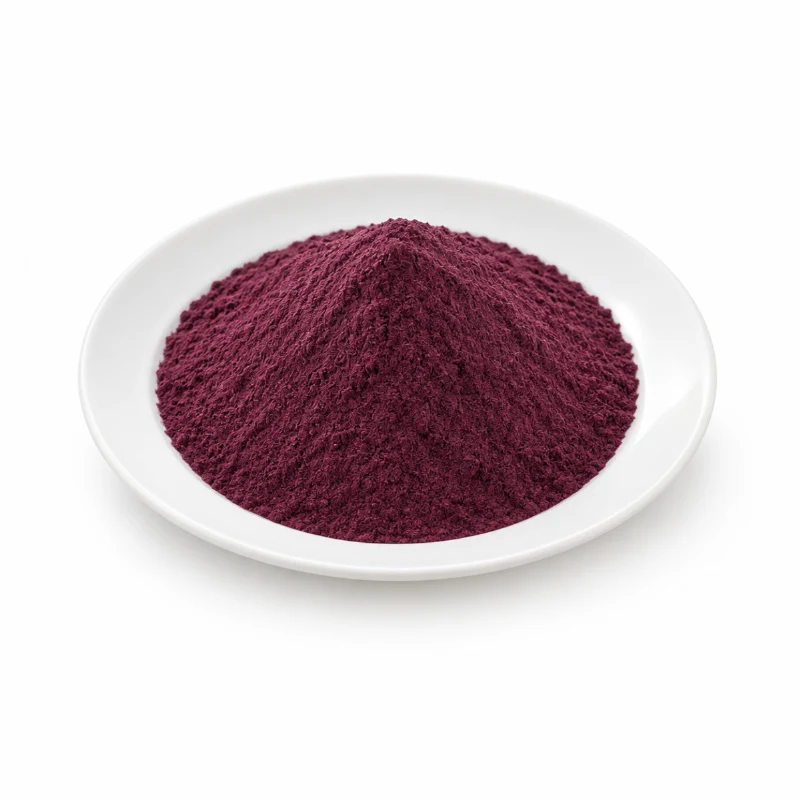
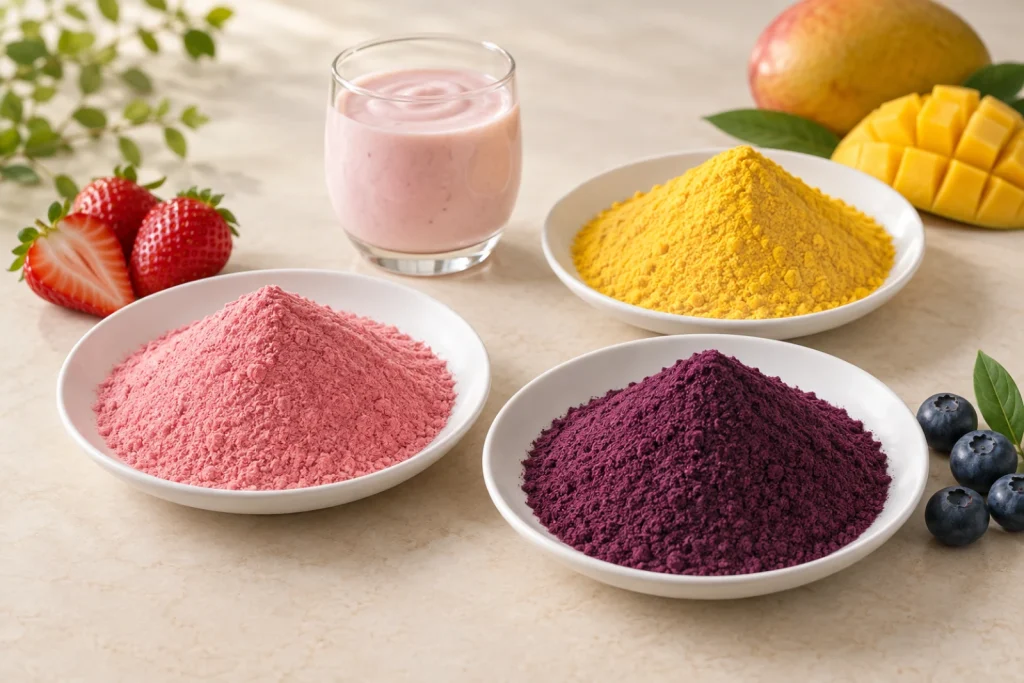
Dairy or dessert: note colour immediately after mixing and at planned holding intervals. Assess flavour and mouthfeel together. A fruit powder may be a useful trial candidate, but do not assume that every powder disperses identically or produces a smooth, sediment-free mixture.
Carry the observation sheet into the next batch
For a larger trial, keep a record of mixer type, batch weight, mixing time and fruit addition sequence. Compare the finished result against the original reference. If it differs, investigate the process and ingredient specification before raising the fruit addition rate.
Retain samples in the intended packaging for a shelf-life study designed for that product. A successful kitchen trial is not evidence of a particular commercial shelf life.
Separate performance from food safety
Texture and colour checks do not replace a food-safety assessment. University of Minnesota Extension explains that freeze-drying is not a microbial kill step. Your quality team should define the controls and acceptance criteria appropriate to the ingredient and finished food.
Share your application and trial observations with TIANQIN so the next sample discussion starts with a clear brief.