Packaging decisions continue to matter after a shipment arrives. A large pack may suit a full production batch but be awkward for a development kitchen that uses only a small quantity at a time. Start the packaging discussion with your actual workflow.
Match the pack to the batch
Write down the amount used per batch, the number of batches per shift and who handles the remaining ingredient. Compare a larger pack with several smaller packs using those quantities. Include handling time, unused material and storage space in the discussion rather than comparing unit price alone.
For fragile formats, ask how the inner pack and outer carton protect the ingredient during transport. Inspect delivered samples for broken pieces and fine material, and distinguish appearance preferences from agreed acceptance criteria.
Specify the package, not just its appearance
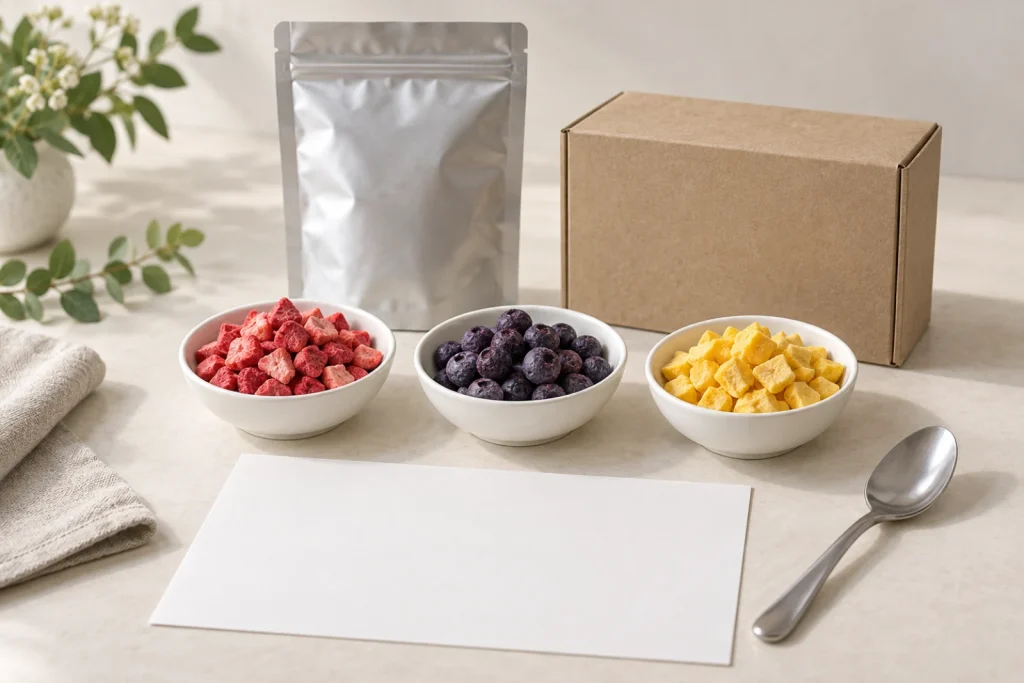
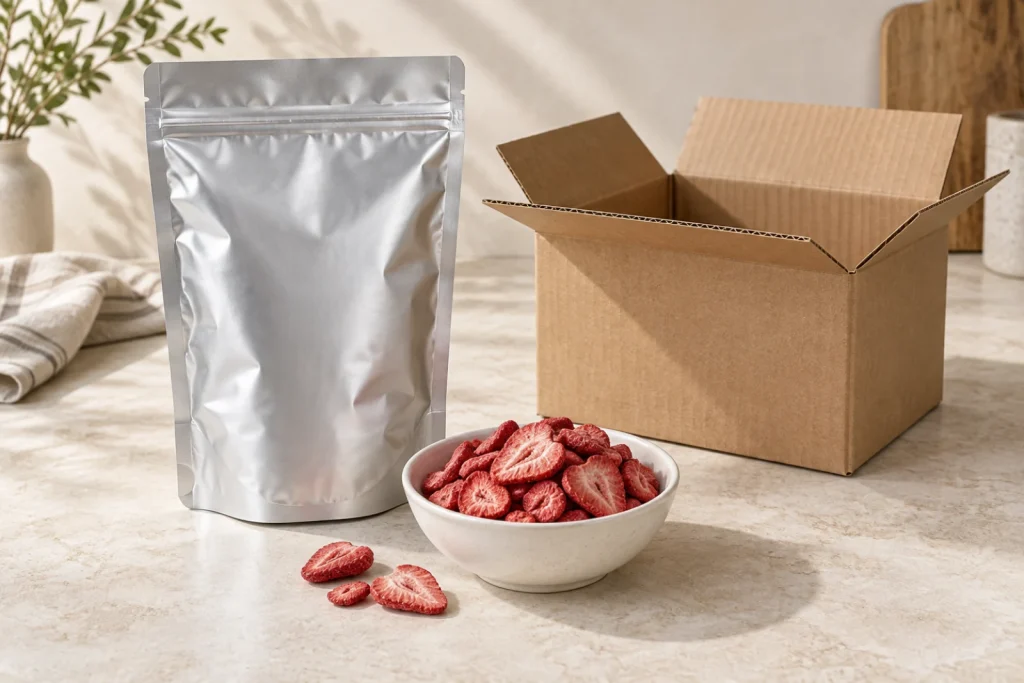
A silver pouch or a kraft carton does not by itself establish a barrier specification. Ask the supplier to identify the proposed food-contact packaging, closure and relevant performance information. If your team needs particular moisture or oxygen barrier data, include that requirement in the brief.
Utah State University Extension describes airtight, moisture-resistant packaging for dried foods. Treat this as background: the suitable packaging and shelf life for a commercial ingredient need to be established for that product.
Plan what happens after opening
Prepare a simple handling record with the product name, lot, opening date and applicable supplier instructions. Decide where part-used packs belong and how their identification stays attached. Avoid transferring an ingredient into an unlabelled container or combining leftovers from different lots without an approved procedure.
Ask for opening and resealing guidance before ordering. Do not assume that the unopened shelf-life statement also describes a repeatedly opened pack. Any internal use period should be supported by your quality procedures and the conditions in which the ingredient is handled.
Review the first delivery
Record the condition of the outer carton, inner seals and labels on receipt. Check that the delivered pack matches the agreed description. Escalate damaged packaging through your receiving procedure; an attractive ingredient inside is not a reason to overlook a compromised seal.
Discuss pack sizes and handling requirements with TIANQIN. Include your normal batch quantity and the format you plan to use.