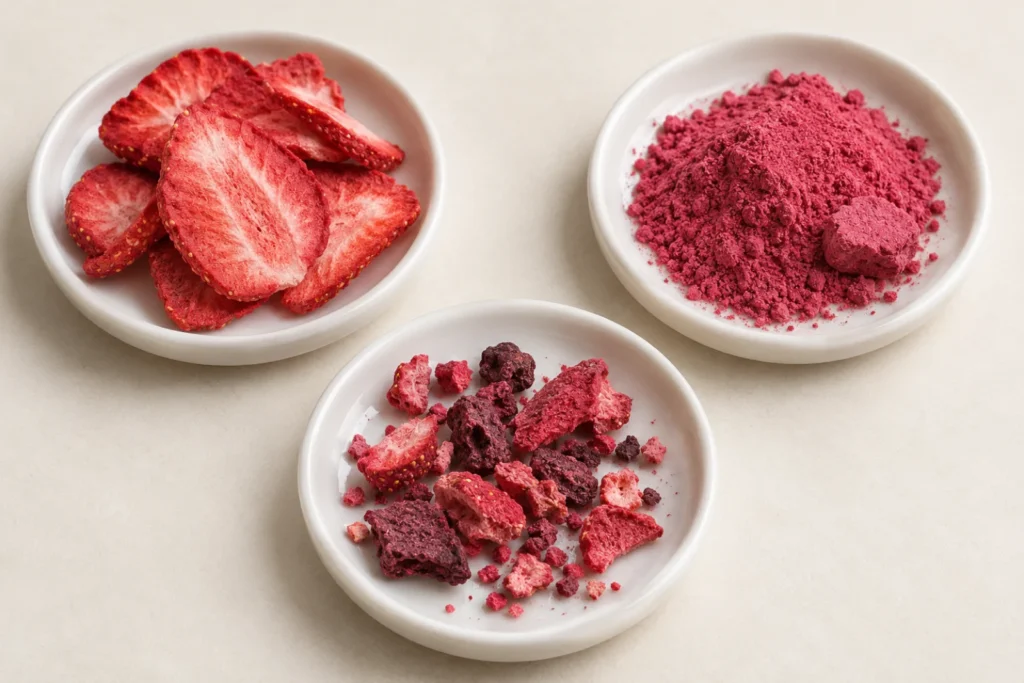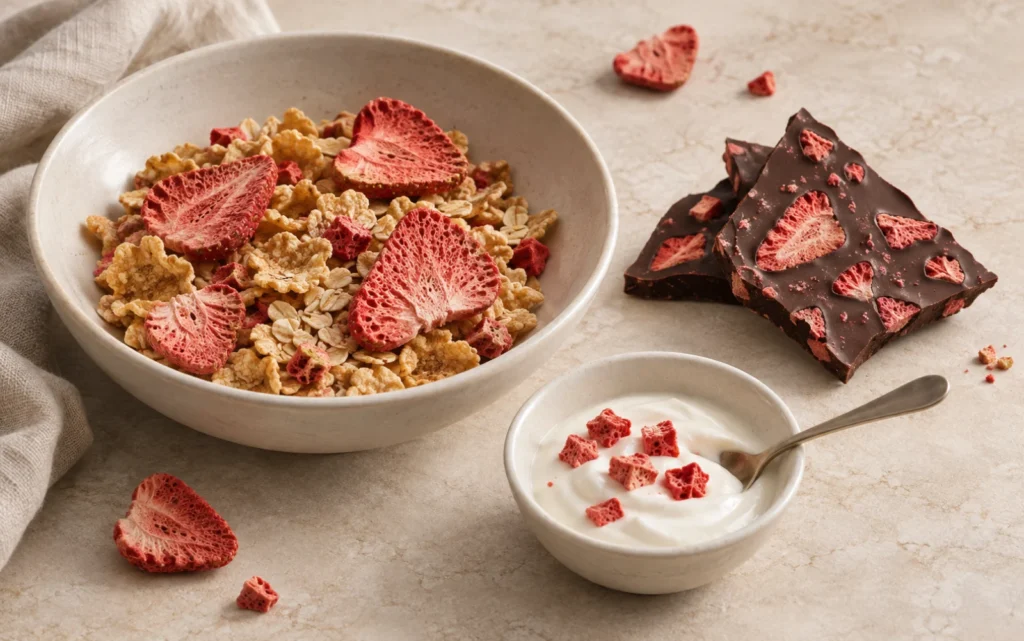
Freeze-dried strawberry can bring visible fruit, tart flavour and a crisp bite to cereal, chocolate, snacks and desserts. For a food manufacturer, however, a good-looking sample is only the start. The chosen cut, broken-piece content, moisture condition and behaviour in the finished recipe all need to fit the production process.
This buying guide helps development, purchasing and quality teams compare formats and turn a promising sample into a clear ingredient brief.
Choose the strawberry format for the finished product
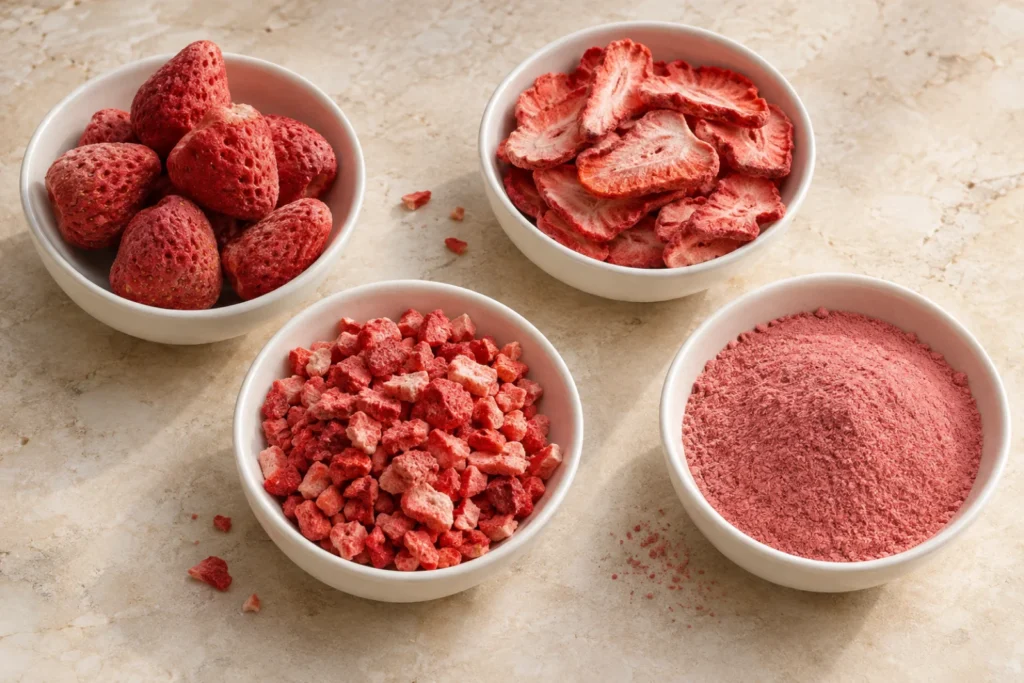
Start with what the consumer should see and feel. Whole fruit and halves can make the fruit recognisable, but their size and fragility matter when they pass through mixing, coating or packing equipment. A berry that survives a sample pouch may not survive a production line.
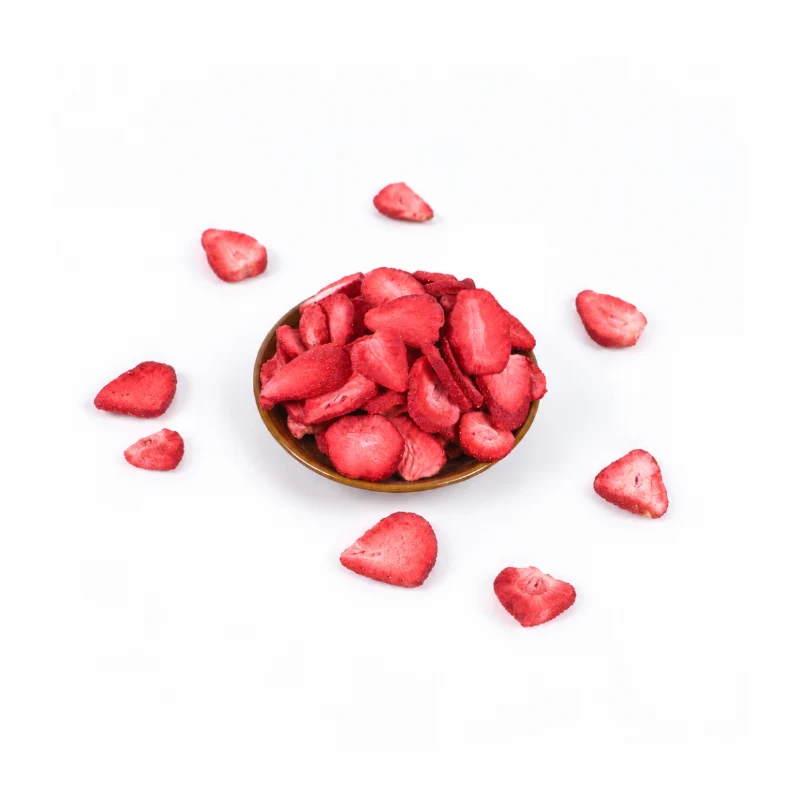
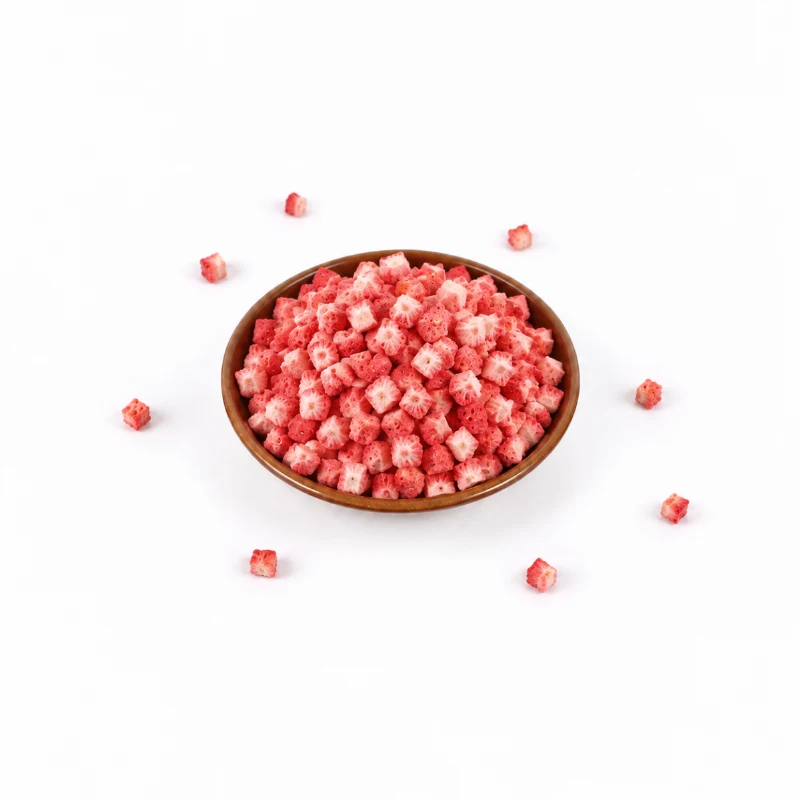
Slices provide a broad visible surface for cereal, chocolate bark or a topping. Agree a thickness range and the allowed proportion of broken pieces. Dices can distribute more evenly through a blend, although the result depends on their size and the other ingredients.
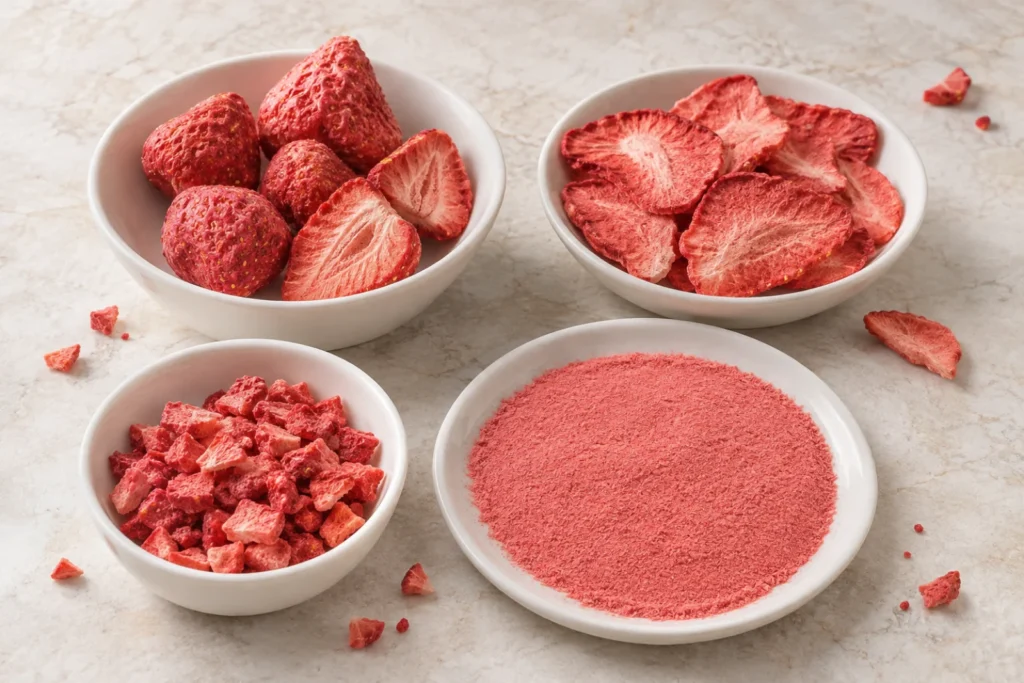
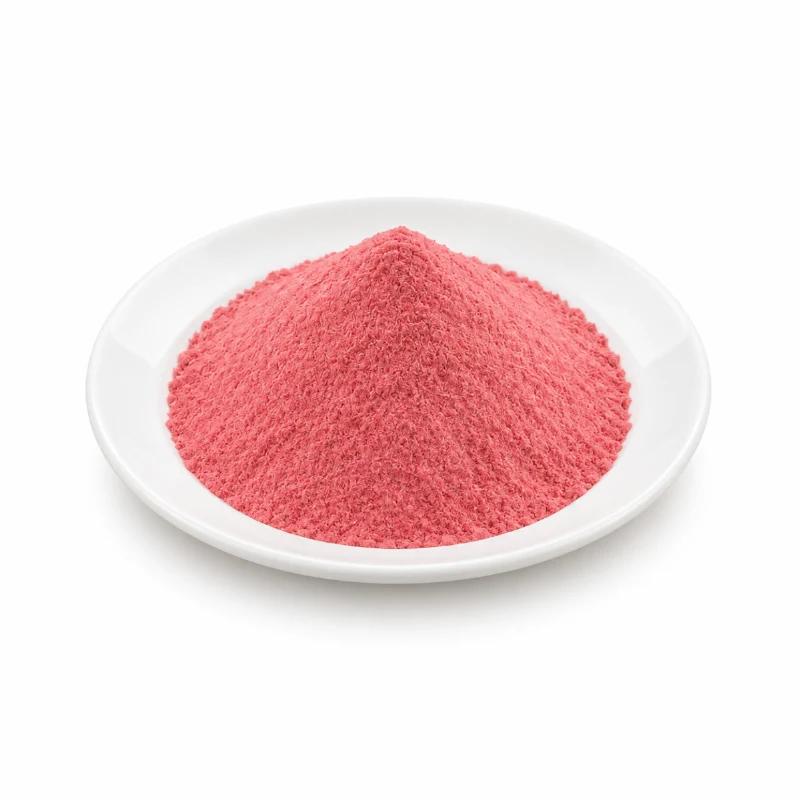
Powder is useful when strawberry flavour and colour matter more than visible pieces. It also adds fruit solids: fibre and seeds may remain suspended or settle in a drink. Treat complete solubility as a test question, not an assumption.
Test flavour, colour and texture in your own recipe
Variety, ripeness, processing and storage can change the sensory result. Compare representative samples at the proposed addition rate, in the same base recipe and process you intend to use commercially. Keep a control batch so the effect of the fruit is easier to judge.
For cereal, examine both the dry blend and a serving with milk or yogurt. For chocolate, inspect the surface and a broken section after handling. For powder, record colour and mouthfeel immediately after mixing and after the planned holding time. A dry ingredient photograph cannot answer those application questions.
Freeze-dried fruit does not return to fresh-fruit texture simply because water is added. The texture that matters is the one in the finished food, at the time the customer eats it. For a practical trial method, see our guide to testing freeze-dried fruit in a recipe.
Turn sample approval into measurable requirements
Before approving a commercial order, put the expectations in writing:
- Fruit format, dimensions and the permitted proportion of fines or broken pieces.
- Ingredient composition, including any carrier, coating or pretreatment.
- Moisture and water activity limits, with the agreed measurement methods.
- Appearance, flavour and texture criteria, with an approved reference sample.
- Microbiological and chemical requirements relevant to the intended use and market.
- Pack size, storage instructions, shelf life and batch documents.
Moisture content measures the amount of water; water activity describes how available that water is. They are different measures, so do not substitute one for the other. The US FDA explains water activity in more detail. Agree limits for the product and intended use instead of copying a generic number.
Check handling and stability after packing
Freeze-dried strawberry can take up moisture from humid air or neighbouring ingredients. Low water activity in the unopened fruit does not by itself establish the texture or shelf life of the finished cereal, chocolate or snack. Limit exposure between opening and resealing, then test the actual product in its intended package and storage conditions.
Freeze-drying should not be treated as a microbial kill step. University of Minnesota Extension describes this food-safety limitation. Your quality team should assess the supplier’s controls and define suitable acceptance criteria, especially when the fruit is added without a later validated control step.
Frequently asked questions
Can strawberry powder replace a flavouring in every recipe?
No. Powder contributes fruit solids as well as flavour. It can change acidity, colour, texture and processing behaviour. Compare it in formulation trials before deciding whether it meets the product brief.
How long will strawberry pieces stay crisp?
That depends on the fruit specification, the surrounding ingredients, the package and storage. The ingredient’s stated shelf life cannot establish the shelf life or eating texture of the finished product.
Discuss a freeze-dried strawberry requirement
Tell the TIANQIN team the finished-product type, preferred cut, destination market, expected order volume and packaging needs. Ask which formats and product specifications are currently available before arranging a sample comparison.