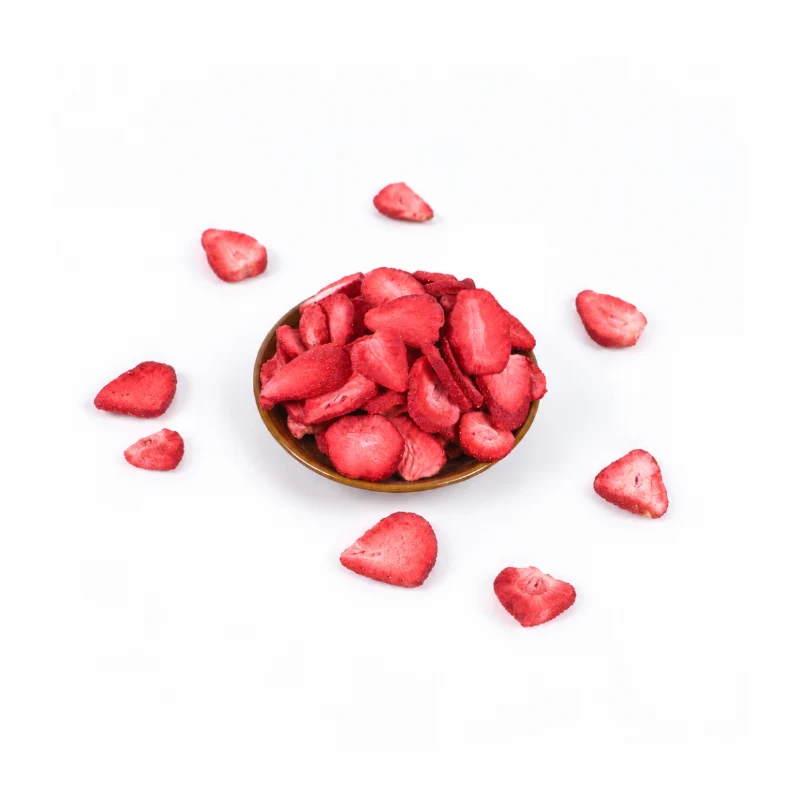
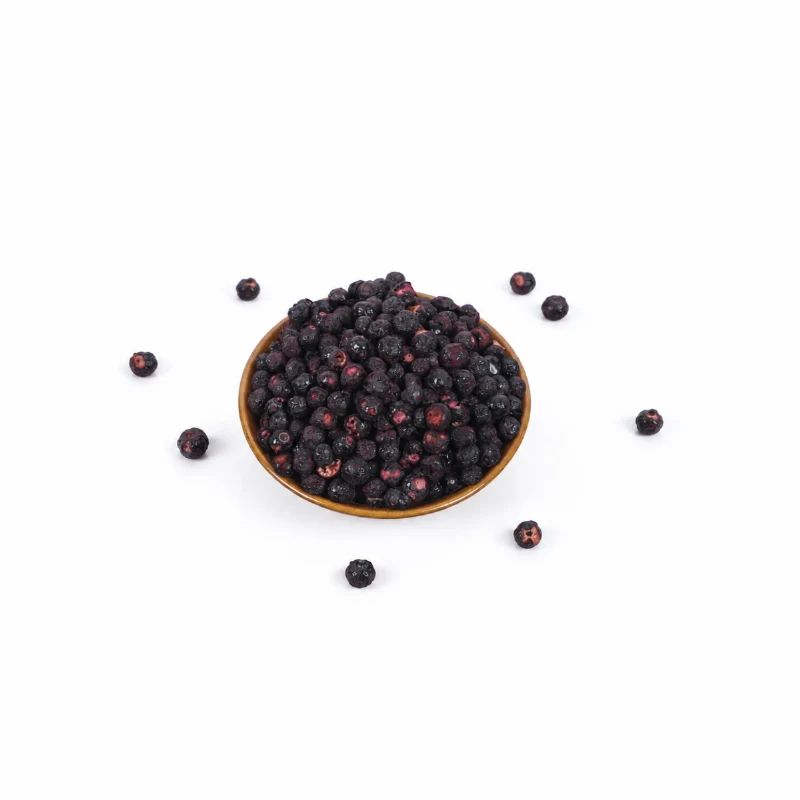
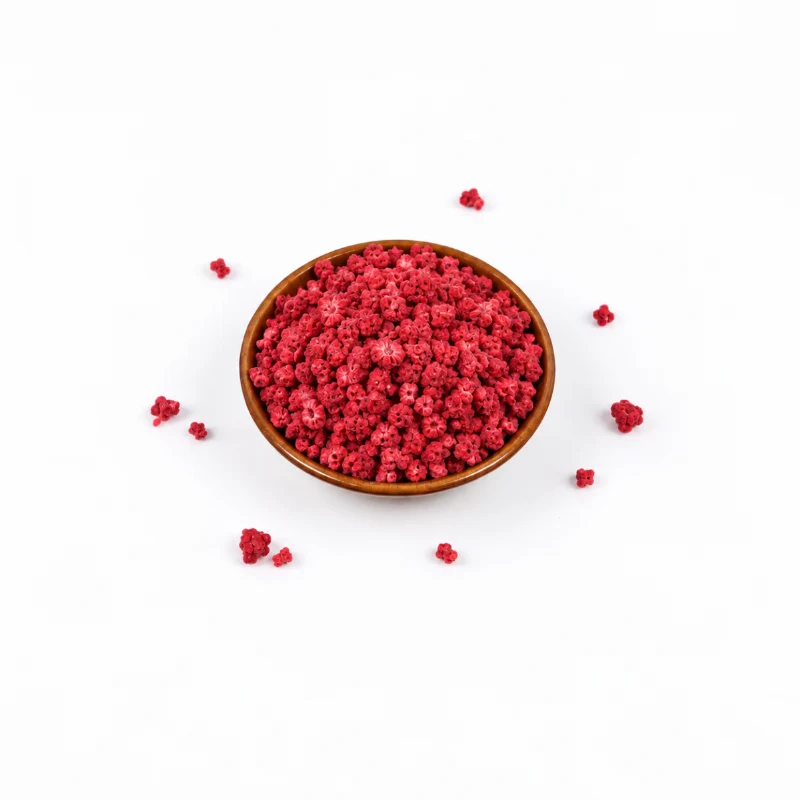
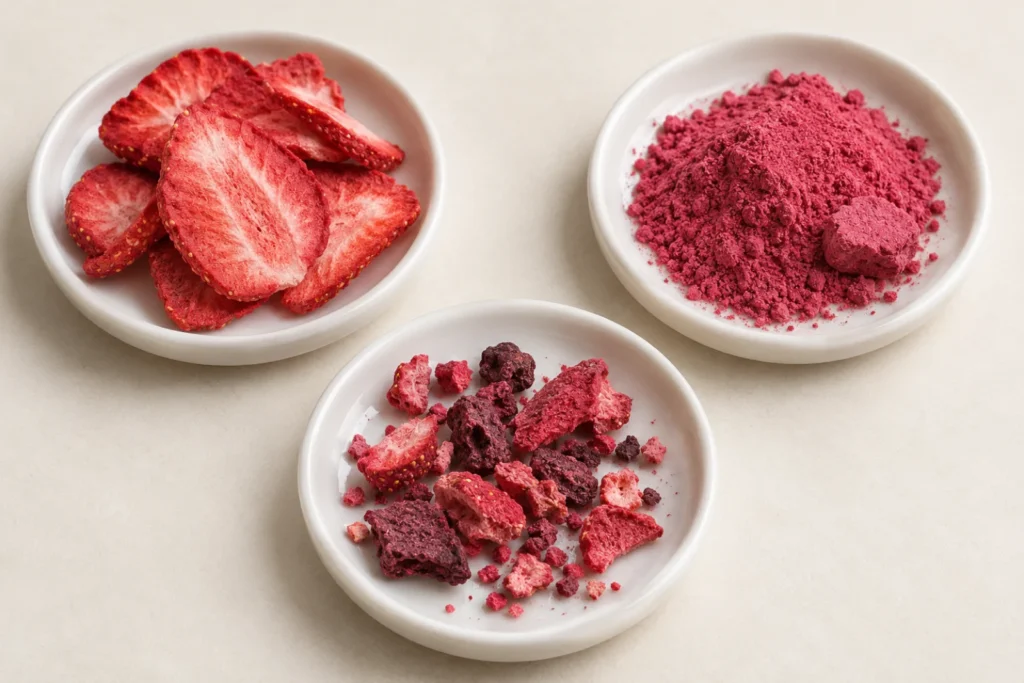
Freeze-dried fruit can add recognisable pieces, fruit flavour and texture to cereal, granola and instant porridge. Commercial performance depends on how the fruit moves through the line, mixes with other ingredients and behaves during storage and serving.
For a cereal manufacturer, the buying specification should cover those conditions as well as the appearance of the incoming ingredient.
Define the serving experience first
A dry granola snack may need the fruit to remain crisp while eaten directly. Cold-milk cereal needs a different texture after a short contact time, and instant porridge may call for rapid softening during hot preparation.
Test the proposed fruit with the actual base and serving instructions. Do not assume that every freeze-dried fruit rehydrates in seconds or returns to fresh-fruit texture. Fruit type, cut, processing and liquid conditions all influence the result.
Choose dimensions and grading for the line
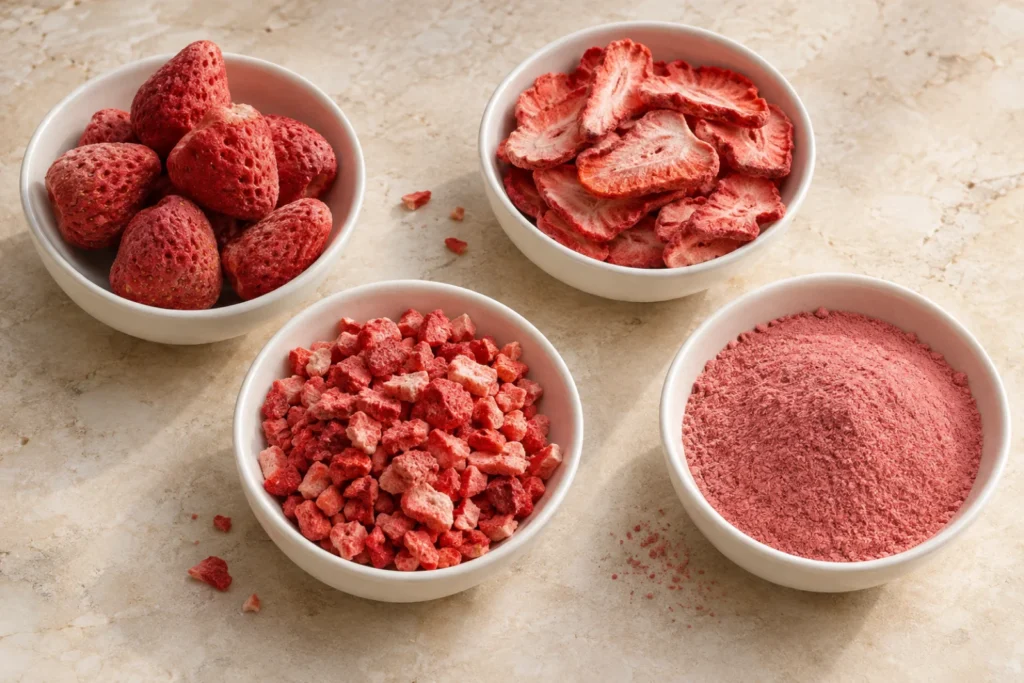
Slices can give strong visual recognition. Dice, crumble and smaller pieces may suit other blends and dosing arrangements. Specify the size distribution, permitted broken pieces and fine-material content using an agreed assessment method.
Check that fruit dimensions fit the filling equipment and the intended pack. Large visible slices can be fragile; a smaller cut can still generate fines if the handling system is too aggressive. Use a trial to assess the actual balance between appearance and usable yield.
Check segregation and breakage
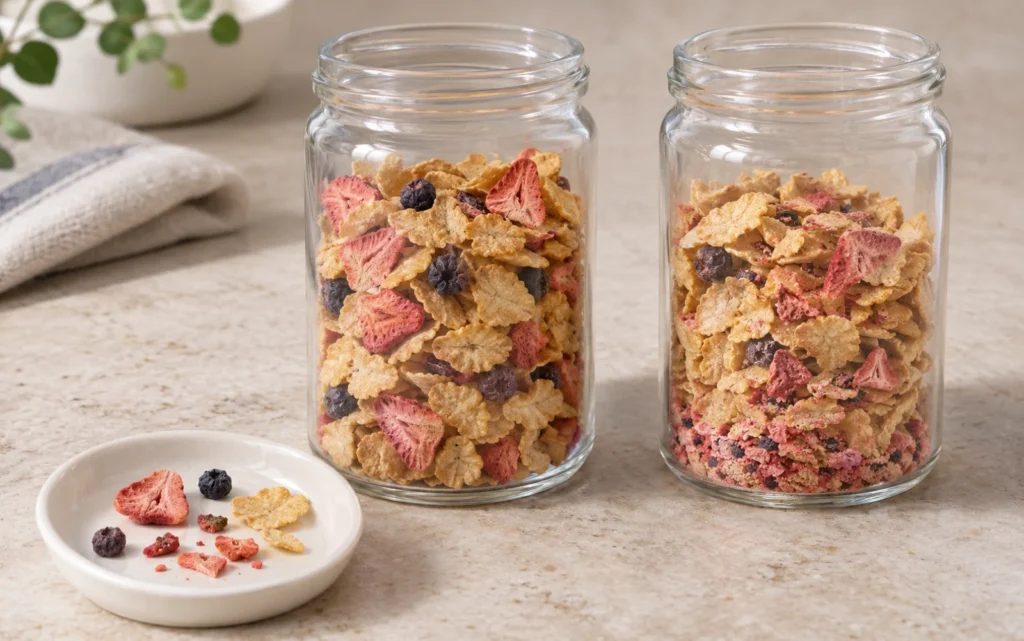
Differences in particle size, shape and density can cause fruit and cereal to separate during mixing, transport or filling. A consistent blend in a small bowl does not establish consistency through a commercial packing run.
Sample packs from the beginning, middle and end of a representative trial. Compare fruit content, size distribution and dust. Examine transfer points, drop heights, mixing time and hopper residence if results vary.
Define a practical acceptance method for the finished blend. Consistency should be demonstrated through samples rather than promised solely because the fruit cut is described as uniform.
Evaluate water activity across the recipe
Dry ingredients can still exchange moisture. Fruit, toasted cereal, nuts, syrups and other components may have different water activities. As moisture redistributes, one or more components can lose the intended texture.
Measure relevant components and test the complete product in its planned packaging. A low incoming fruit water activity is useful information, but it does not prevent later moisture absorption. A soft cereal bar also needs its own assessment rather than inheriting the result from a dry granola blend.
If the process includes warm ingredients, establish when the fruit is added and whether cooling is needed before mixing and packing. Assess the actual process rather than assuming all dry mixing conditions are equivalent.
Agree packaging and release requirements
Confirm pack size, moisture protection, resealing instructions and handling after opening. Select bulk pack quantities that suit the rate of consumption so opened material is not unnecessarily exposed to humidity.
Agree composition, moisture, water activity, grading, traceability and food safety documentation appropriate to the product. Where fruit is added after the cereal's heat step, do not assume that an earlier process controls hazards introduced with the later ingredient.
Frequently asked questions
Can one fruit specification work in granola and porridge?
Possibly, but check both dry storage and preparation performance. The preferred cut and softening behaviour may differ.
Will a finer cut solve segregation?
It may help in some blends, but density, shape, mixing and transfer conditions also matter. Test the proposed change on the line.
Prepare a cereal ingredient enquiry
Send TIANQIN the cereal type, serving method, preferred fruit format, inclusion rate and packing process. Ask which available specifications can be sampled for a production trial.