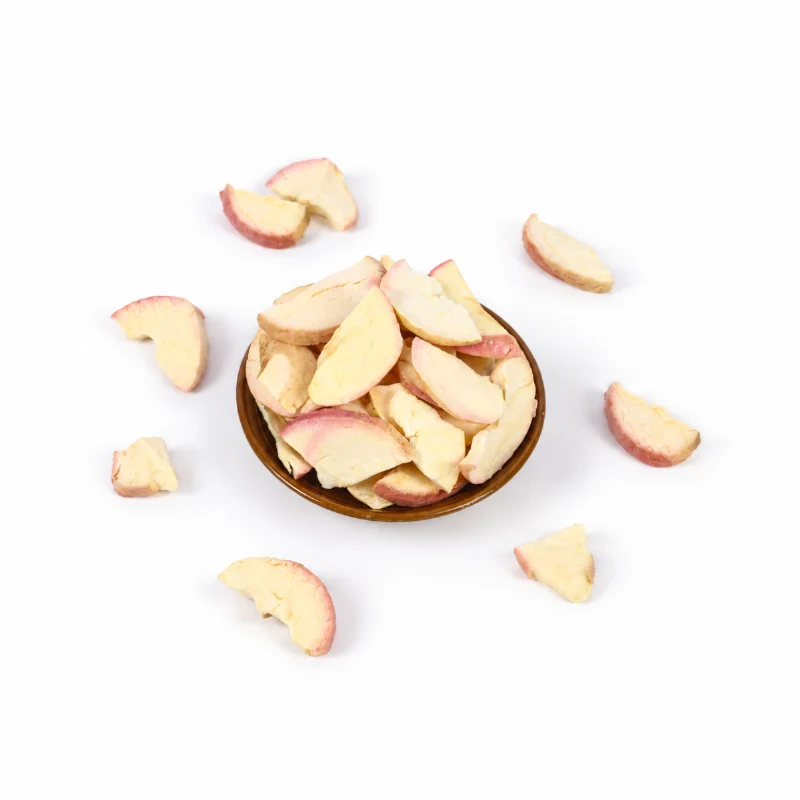
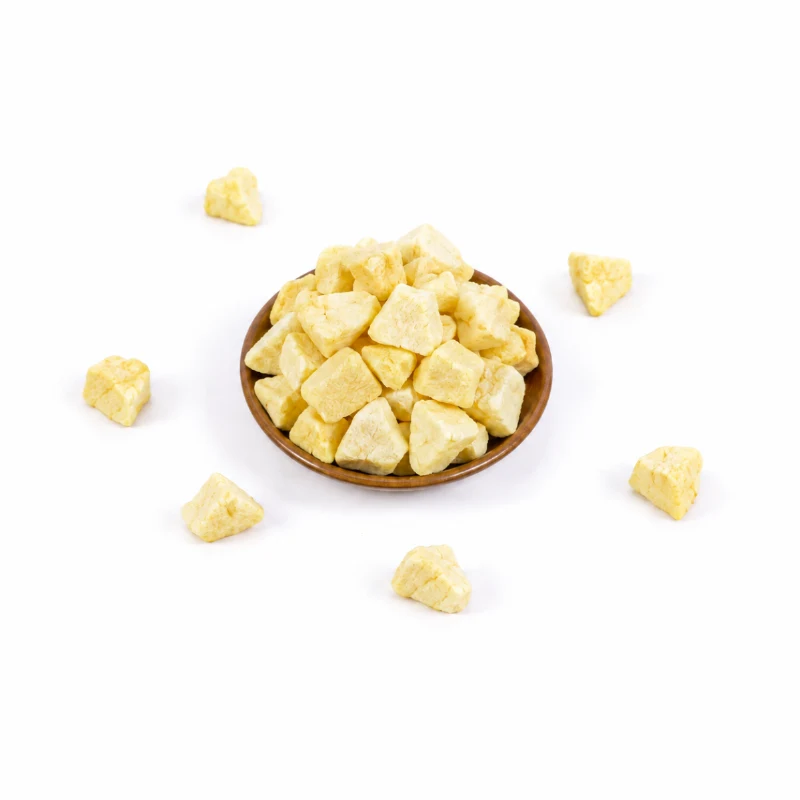
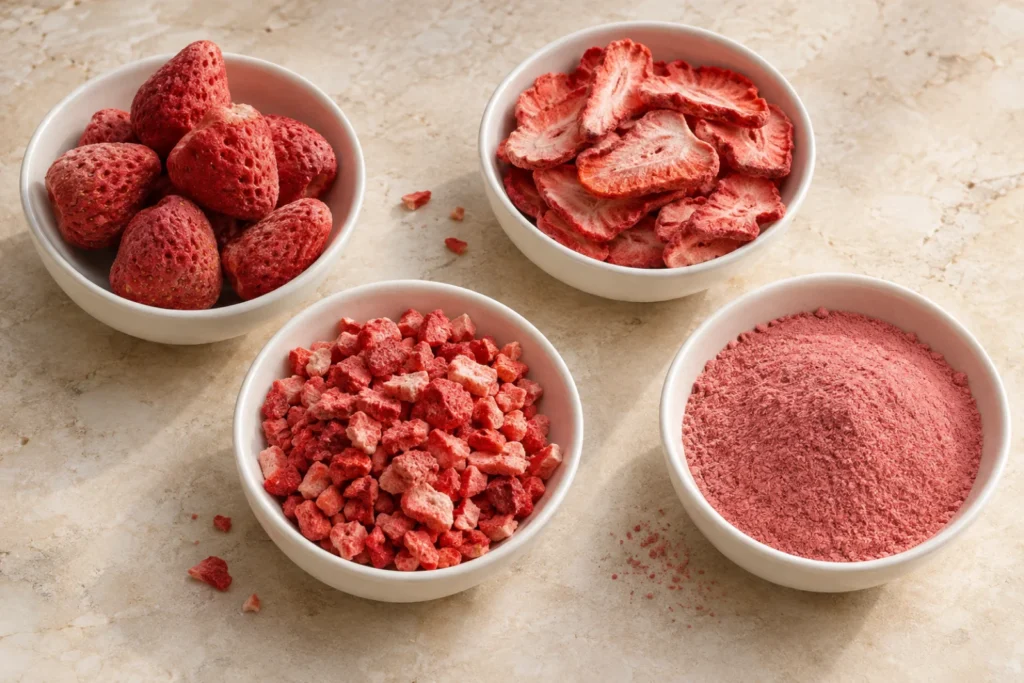
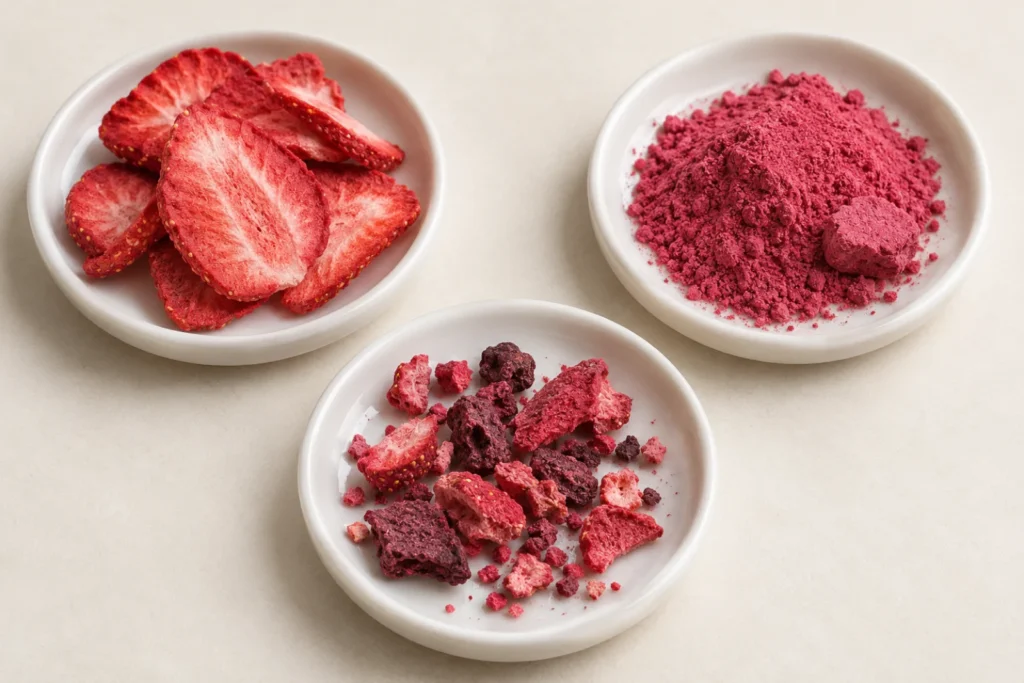
Freeze-dried apple can be used in fruit snacks, breakfast cereals, dry mixes and bakery development. A product described simply as “apple pieces” can still vary in peel content, cut size, sweetness, colour and texture. These differences can become visible when production scales beyond the first sample.
For B2B sourcing, define the eating experience and manufacturing conditions before choosing a cut or comparing quotations.
Confirm peeled or skin-on apple
Skin-on pieces retain a visible peel edge that may suit snacks or cereal blends. Peeled pieces give a different appearance and mouthfeel. Neither option is automatically preferable: choose according to the product brief and test the result.
Confirm the peel specification in writing. If peel fragments or dark specks would be unacceptable in a powder or pale filling, discuss those requirements before approving the sample.
Select a cut that fits the application
Slices, rings and wedges can suit products where consumers should recognise the apple. Specify thickness and acceptable broken-piece content, and check how the pieces fit inside the retail pack.
Dice and smaller pieces can serve cereal, granola and dry baking mixes. Their suitability depends on size, bulk density and resistance to the actual handling process. They do not automatically remain evenly distributed in a blend.
Powder adds apple solids and flavour without larger pieces. Whole-fruit apple powder contains components that may remain suspended or settle in liquid. A request for a clear, fully soluble beverage ingredient therefore needs a separate discussion rather than an assumption about fine milling.
Use variety information alongside sample testing
Apple variety, maturity and storage history can influence flavour and texture. If a named variety is essential, confirm its availability and how substitutions will be handled. If it is not essential, a sensory reference and measurable finished-product criteria may provide a more practical purchasing specification.
Compare samples at the same addition rate. In a cereal, assess sweetness and bite after contact with milk. In bakery, assess the apple after the intended mixing and heating steps. A dry sample alone will not show the full result.
Ask about colour control and composition
Cut apple can brown, and suppliers may use different preparation and pretreatment methods. Ask what is used and obtain an ingredient declaration suitable for the destination market. Do not describe the product as apple-only or additive-free until the relevant composition has been confirmed.
Colour variation can have several causes. A darker sample is a reason to investigate raw material, preparation and storage; it is not proof of a single processing failure. If colour consistency is important, agree reference samples and an assessment method.
Define the commercial specification
Include cut dimensions, peel status, acceptable fines and defects, moisture, water activity, packaging and storage conditions. Agree the testing and documentation relevant to the destination and final application.
Test the packaged finished product for texture changes. Freeze-dried apple can absorb moisture, including from other ingredients, so its incoming condition does not determine how long a mixed food remains crisp.
Frequently asked questions
Is freeze-dried apple the same as a fried apple chip?
No. The processing methods differ and can produce different textures and compositions. Compare the ingredient declarations and the actual samples.
Does a named variety guarantee a sweeter product?
No. Variety helps describe the raw material, but maturity, processing and batch variation still affect flavour. Sample testing remains necessary.
Discuss an apple ingredient specification
Share the intended product, peel preference, cut, target market and expected order quantity with TIANQIN. Ask which current options match the requirement before arranging a trial.