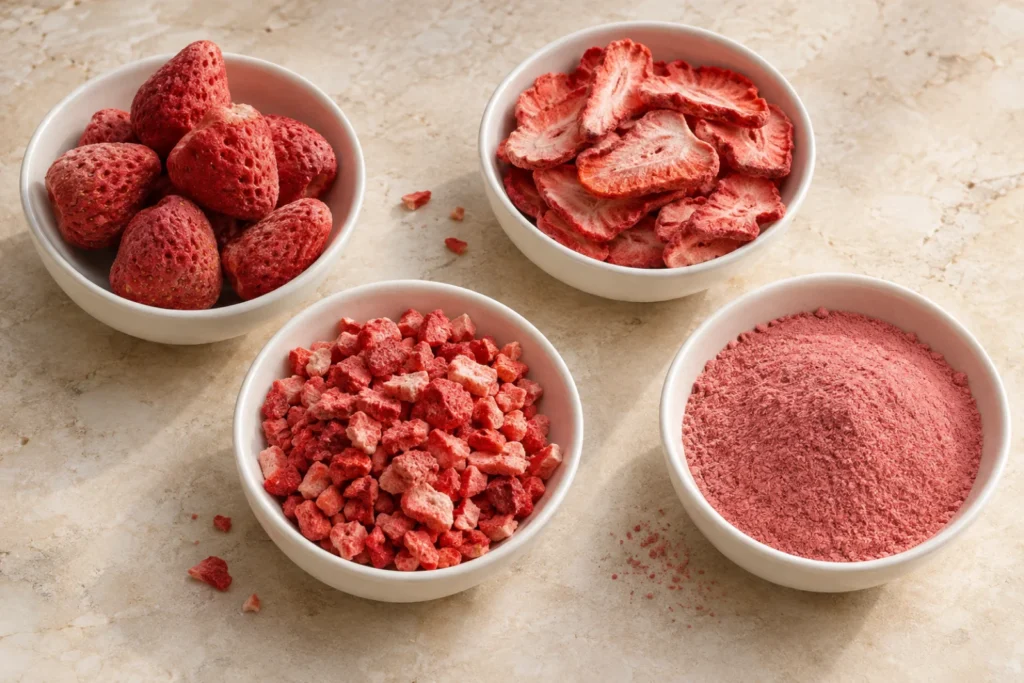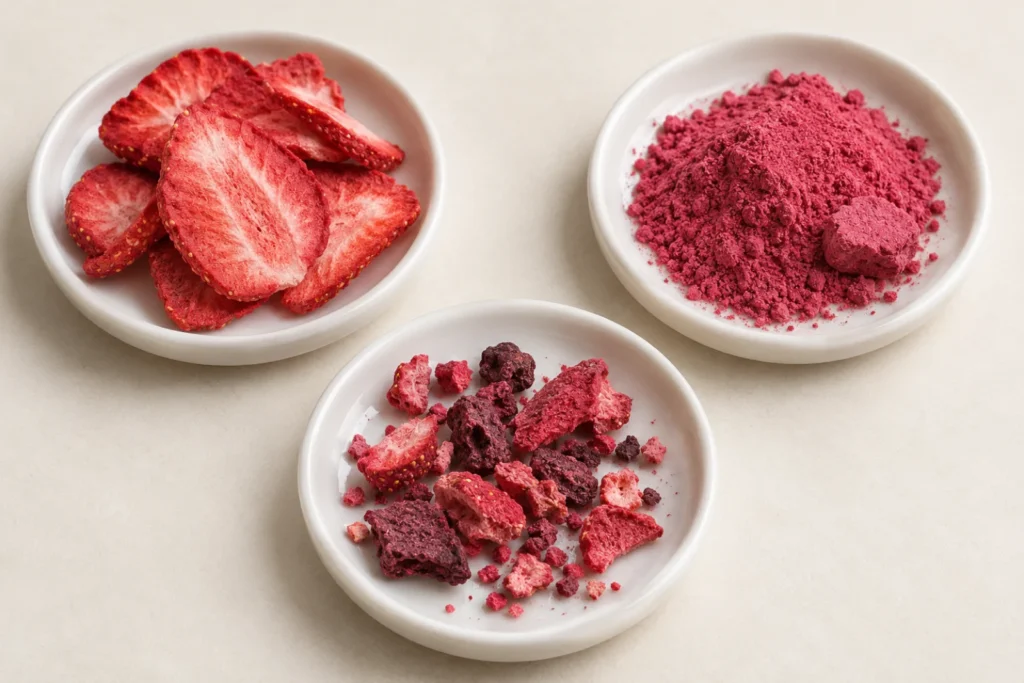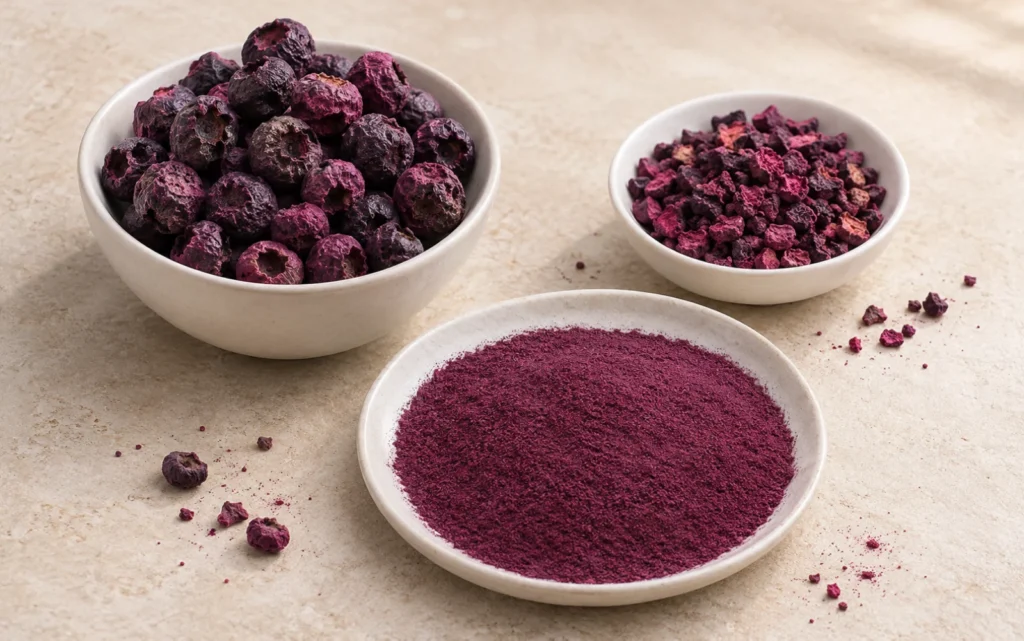
Freeze-dried blueberry offers berry flavour, visible fruit and a crisp texture for dry food products. Whole berries, pieces and powder serve different purposes, and the right choice depends on the manufacturing process and the consumer's eating experience.
For a buyer, appearance is a useful first check. It is not a substitute for a written specification or a laboratory result when a measurable composition claim is required.
Whole berries, pieces or powder?
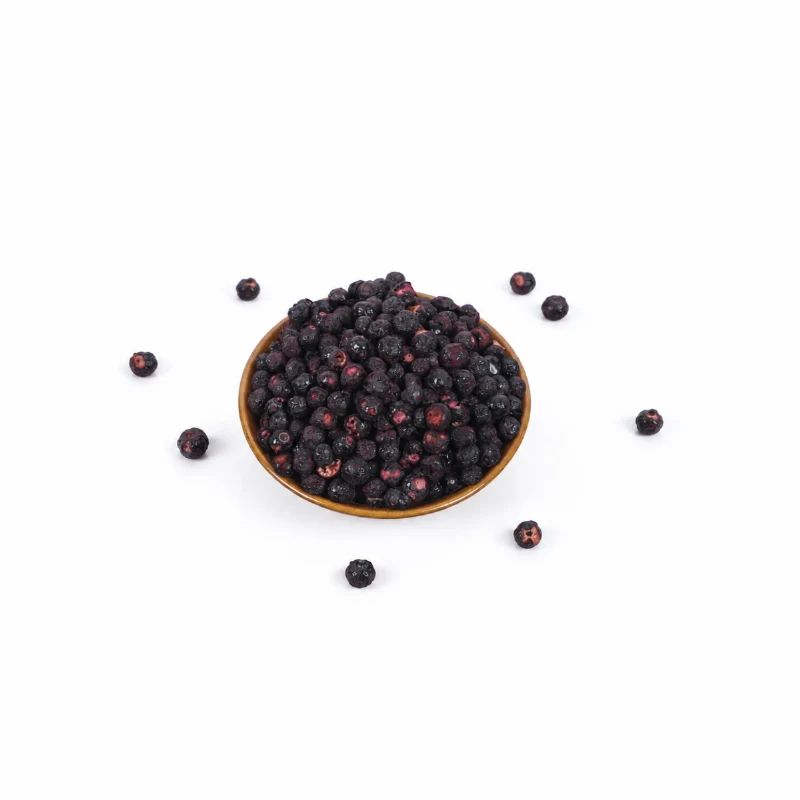
Whole berries can suit coated snacks and blends where the fruit should remain recognisable. Request an agreed size range and acceptable broken-berry content. Larger or uneven berries can behave differently in a coating pan or filling system, so evaluate the sample on the intended equipment.
Pieces and granules can be useful for cereal, bar and bakery applications. Confirm the size distribution and fine-powder fraction rather than relying on a general description such as “small pieces.” Check whether pieces segregate from the rest of the blend during transport and filling.
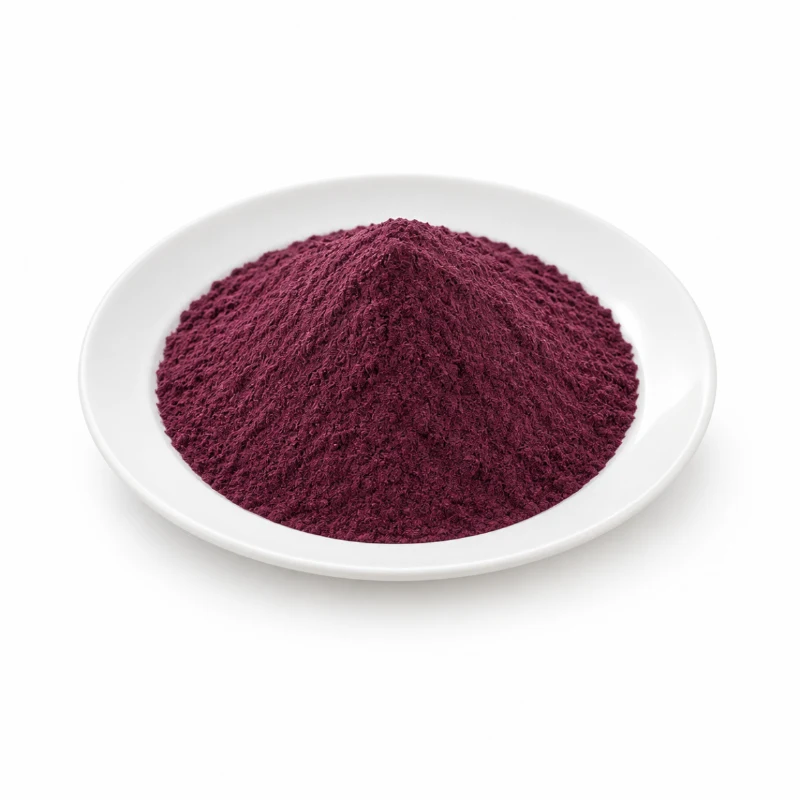
Powder distributes fruit solids through drink mixes, fillings and other recipes. Whole-fruit blueberry powder can contain skin, fibre and seeds; it should not be specified as instantly or completely soluble without an application test. It is also different from a blueberry extract or a spray-dried ingredient containing a carrier.
Treat colour as a quality observation
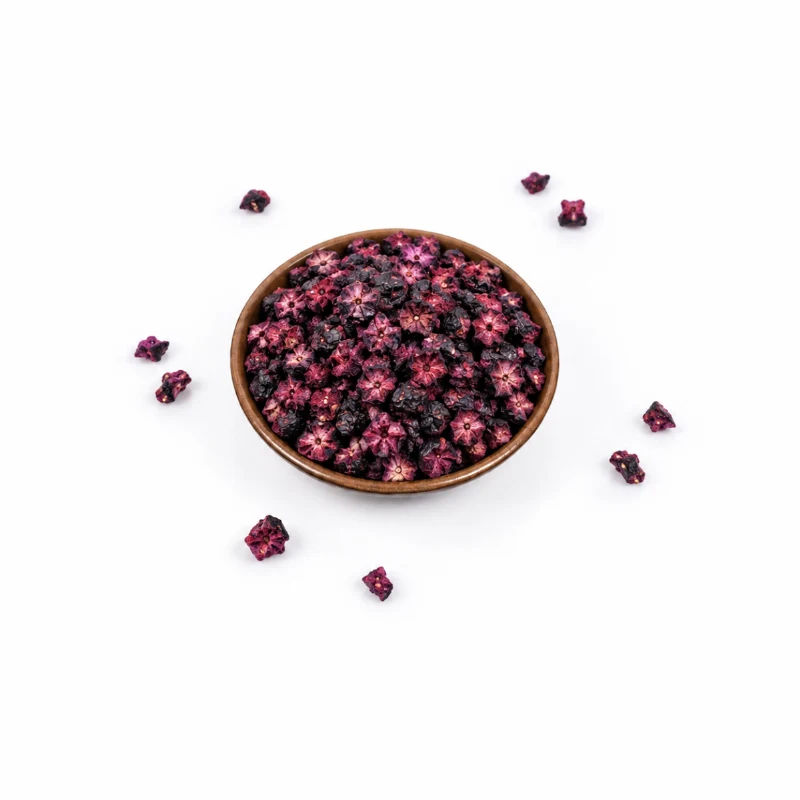
Blueberry appearance varies with raw material, skin condition, processing, particle size and storage. Natural surface bloom and the difference between skin and flesh also affect what a buyer sees.
Blueberry pigments can respond to the surrounding formulation. A dry powder's colour does not establish how it will look in an acidic drink, dairy base or baked product. Test the proposed recipe through processing and storage.
If anthocyanin content matters to the specification, request a suitable laboratory method, reporting units and sampling arrangement. Do not convert a darker photograph into a numerical anthocyanin claim, and do not apply a published retention percentage to an untested commercial batch.
Compare samples on a consistent basis
Use the same inclusion rate and processing conditions when comparing suppliers. Record:
- Berry or particle size distribution and fine-material content.
- Flavour, aroma, visible defects and eating texture.
- Moisture and water activity using agreed methods.
- Behaviour during mixing, coating, heating or rehydration.
- Packaging protection and quality after the planned storage period.
Confirm whether origin, variety or wild-versus-cultivated status is part of the agreed supply specification. A generic blueberry enquiry does not establish those characteristics, and a variety name alone does not establish finished-product performance.
Review safety documentation and packaging
Request documentation that matches the supplied product and lot. The testing plan should reflect destination-market requirements and the intended use. Freeze-drying is not a sterilisation claim, and a low moisture result alone does not demonstrate microbiological safety.
Protect open packs from humidity and assess the final packaging after the fruit is incorporated. A low initial water activity does not guarantee that a berry will stay crisp beside a wetter ingredient or remain unchanged in chocolate.
Frequently asked questions
Is blueberry powder a guaranteed natural blue colour?
No. Its visible colour depends on the ingredient and the recipe, including pH and processing conditions. Evaluate it in the actual product.
Should every order specify an anthocyanin minimum?
Only when that measurement serves the product brief and both parties can support the sampling and test method. Many applications primarily require flavour, appearance and handling performance.
Prepare a blueberry sourcing enquiry
Send TIANQIN your intended application, preferred format, target market and estimated volume. Confirm current availability and documentation before selecting trial samples.