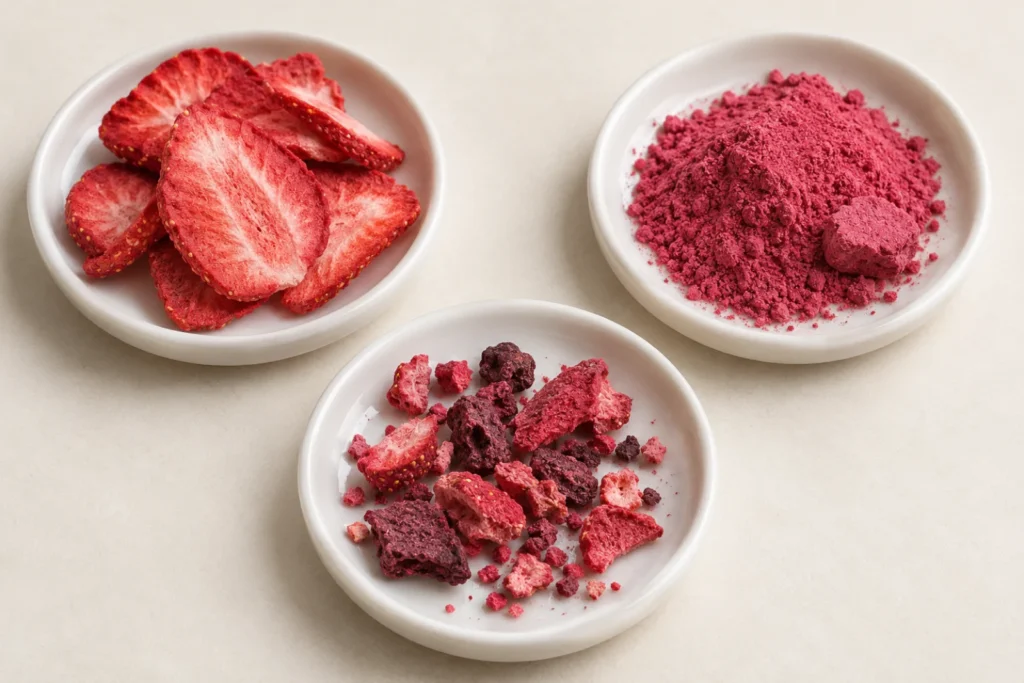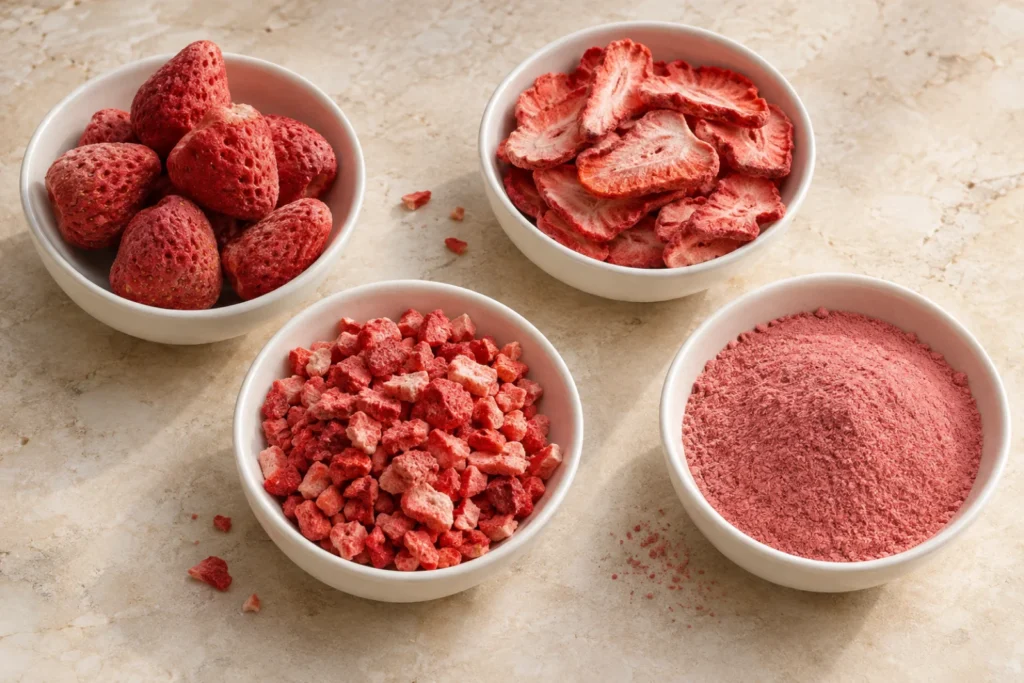
Choosing a freeze-dried fruit format starts with how the ingredient will be processed and eaten. The same fruit can provide visible pieces in a snack, small inclusions in a cereal or fruit solids throughout a filling. Those uses need different purchasing and trial criteria.
Format also affects handling, appearance, dosing and usable yield. A lower price for one format does not establish that it will deliver the required result at a lower finished-product cost.
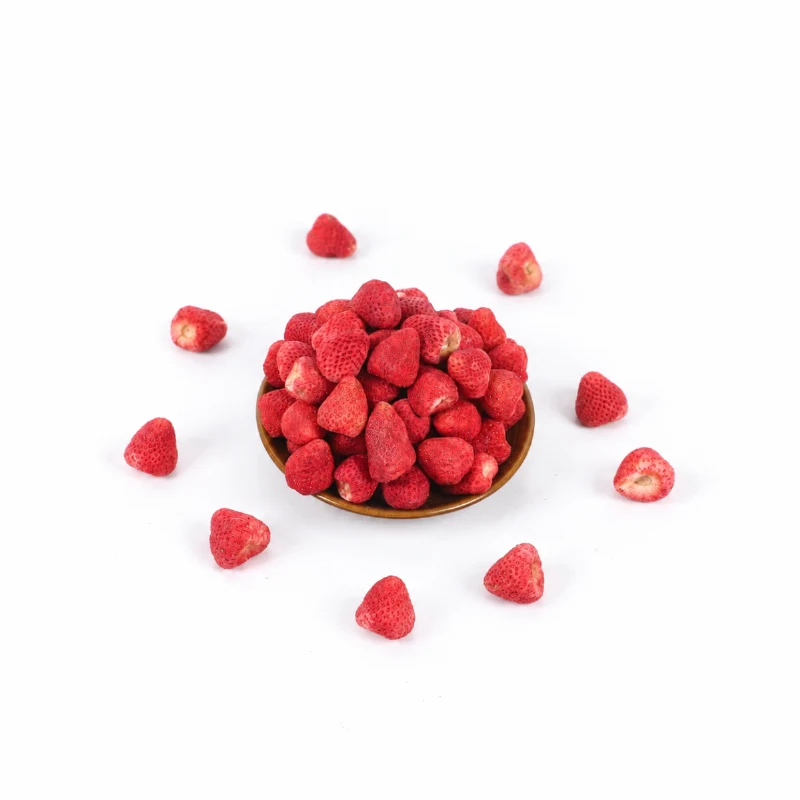
Whole and halved fruit for recognisable shape
Whole or halved fruit can suit coated snacks, toppings and products where consumers should recognise the fruit. Confirm the dimensions, intact-piece requirement and acceptable natural variation.
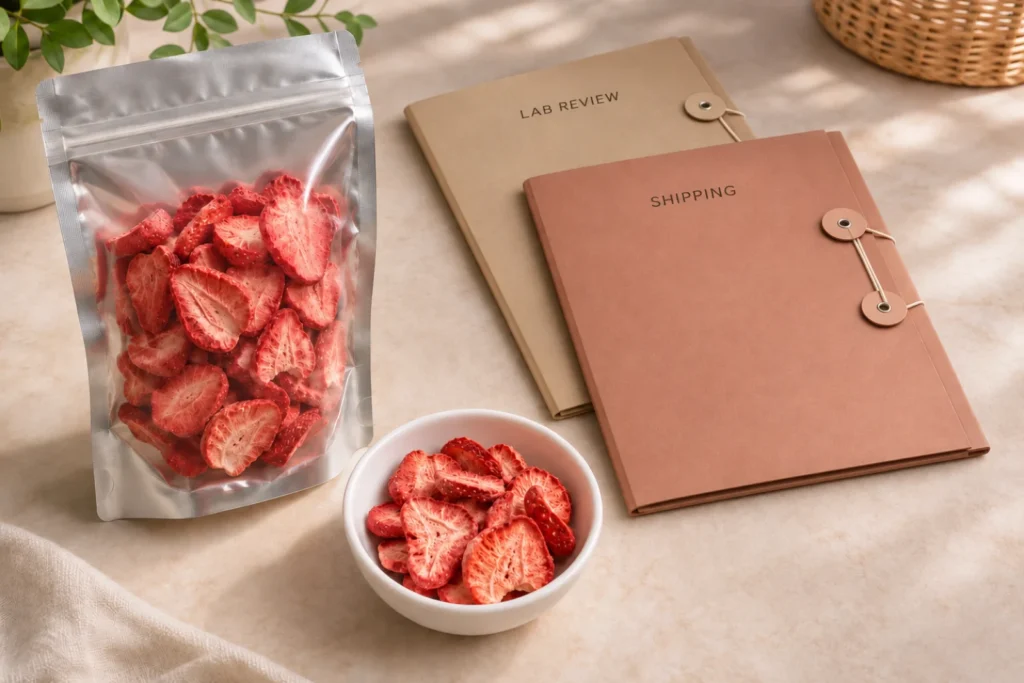
Check whether the fruit fits the equipment and final pack. Large berries may be attractive but can present challenges during coating, transfer and filling. Test physical protection during shipping as well as condition at the packing stage.
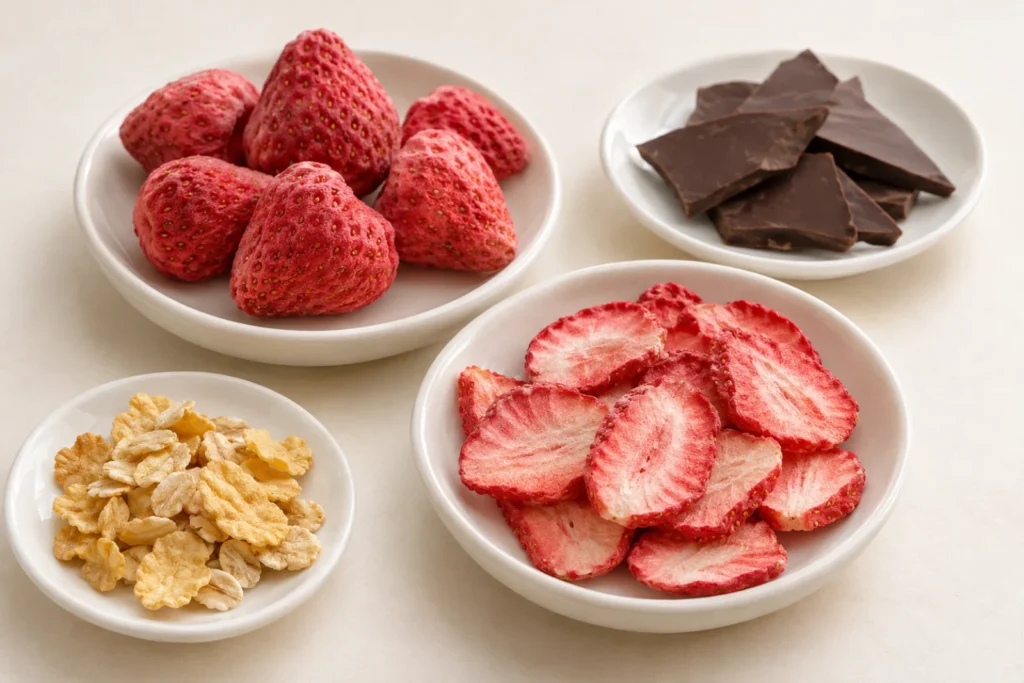
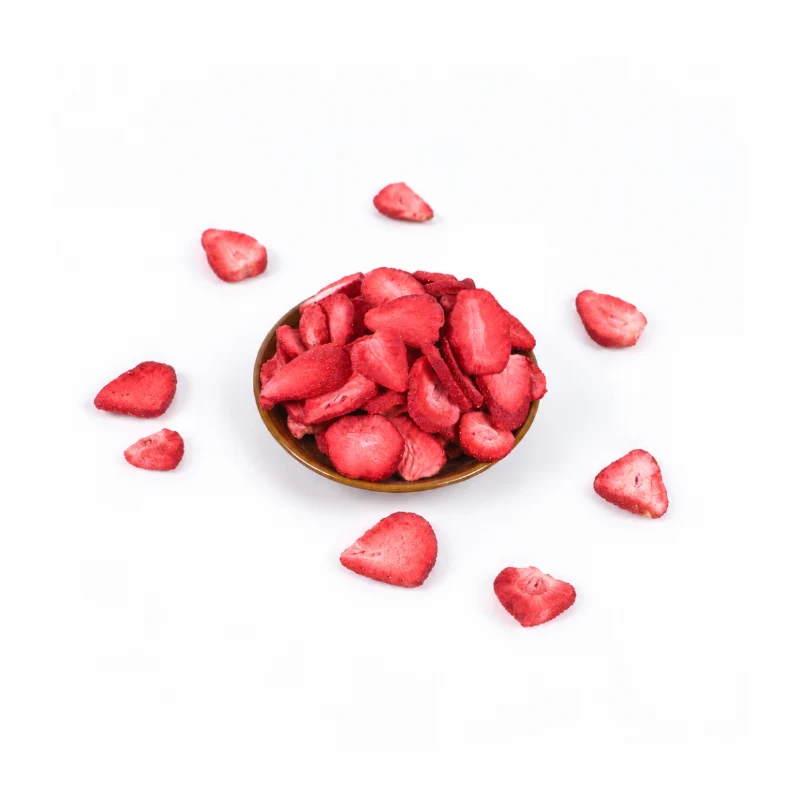
Slices for visible surfaces
Slices can provide a recognisable cross-section in cereal, chocolate bark and decorative applications. Thickness, shape and broken-piece content matter alongside flavour.
Assess how slices survive mixing or placement. A slice suitable for hand decoration may perform differently on an automated line. If visual presentation is central to the product, define how it will be assessed after processing and transport.
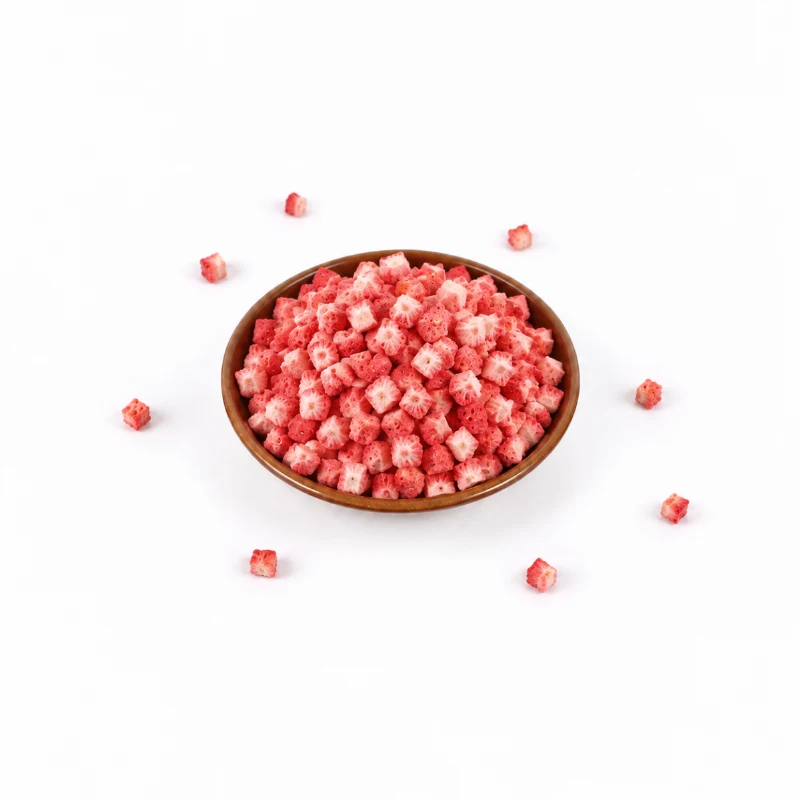
Dice and pieces for controlled inclusions
Smaller cuts can suit bars, cereal blends and dry mixes. Ask for a size range and distribution rather than assuming every piece is an exact cube. Natural fruit structure and preparation affect the geometry that can be achieved.
Trial the cut with the other ingredients. Size, shape and density differences can affect segregation, while mixing and transfer can generate further breakage. A uniform-looking ingredient does not guarantee uniform fruit content in every finished pack.
Crumble and granules for dispersed texture
Crumble or granules may be appropriate where small visible particles are wanted and whole-fruit shape is unnecessary. These terms are not universal grades; confirm the sieve range and permitted fine fraction.
A deliberately specified crumble is different from accepting an uncontrolled mix of fragments. Check flavour, composition and safety requirements just as you would for a larger format, and assess dust generation during the actual process.
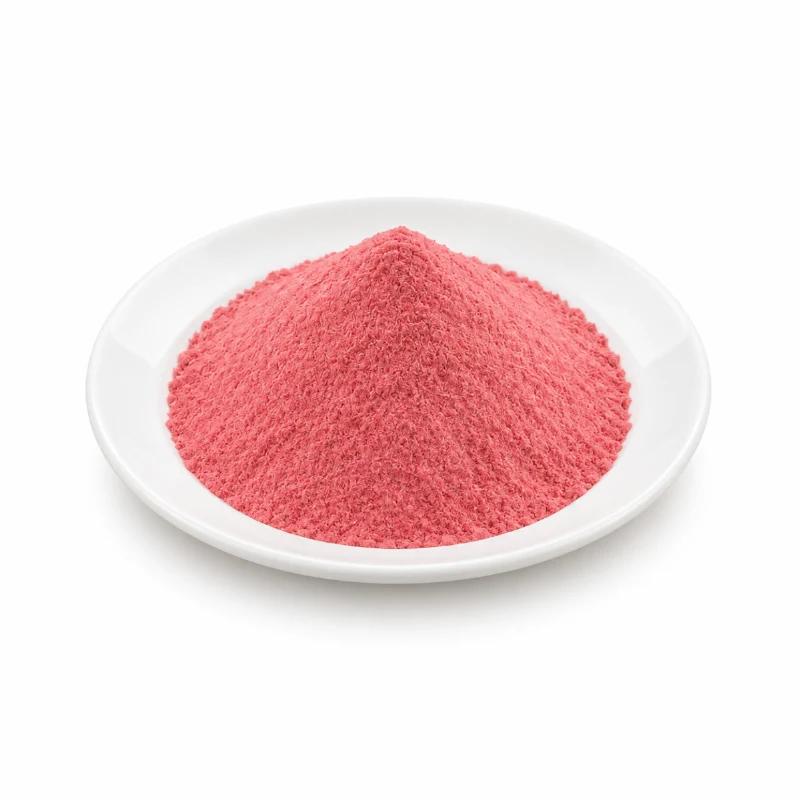
Powder for flavour and colour throughout a recipe
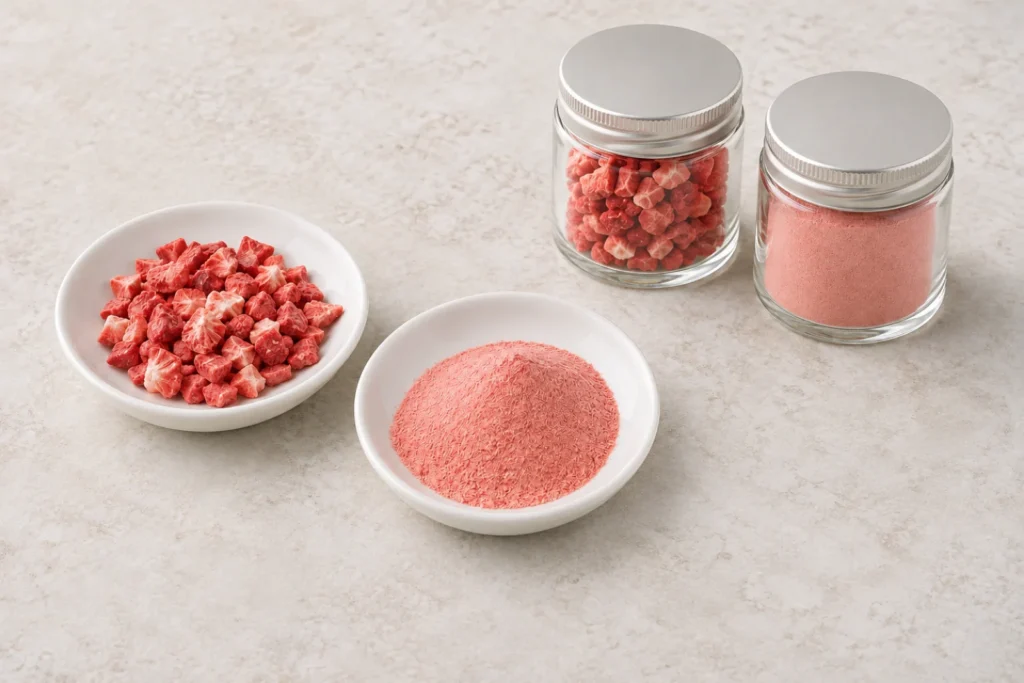
Powder can incorporate fruit solids into drink mixes, creams, fillings and other formulations. Ask whether it is milled whole fruit, juice-based powder, an extract or a formulated ingredient with a carrier. Products sharing a fruit name can have different compositions.
Whole-fruit powder may contain fibre, skin or seeds. Fine milling does not guarantee complete dissolution, a clear drink or a smooth filling. Assess particle-size distribution, mouthfeel, clumping and dispersion under real preparation conditions.
Also check that powder is suitable for your composition and label requirements. Do not infer “fruit only” from the word powder or presume that a company offering fruit pieces can supply every milling specification.
Compare formats through one application brief
For each trial, use the same finished-product objective and record:
- Fruit identity, composition, format and agreed dimensions.
- Target inclusion rate and sensory result.
- Processing conditions and usable yield.
- Fines, breakage, dispersion or rehydration as relevant.
- Packaging and stability of the finished product.
Format changes may also change the dose needed to achieve the desired visual distribution or flavour perception. Compare the actual result instead of treating powder as inherently more concentrated than pieces made from the same dried fruit.
Frequently asked questions
Is powder always the strongest or cheapest option?
No. Composition, processing and the required recipe result determine its value. Grinding alone does not increase the proportion of fruit solids on a comparable moisture basis.
Can every fruit be supplied in every format?
Do not assume so. Availability depends on fruit structure, equipment and the supplier's actual range.
Request formats for a trial
Give TIANQIN the finished-product type, manufacturing process, target market and expected volume. Ask which available formats and dimensions could be compared against that brief.