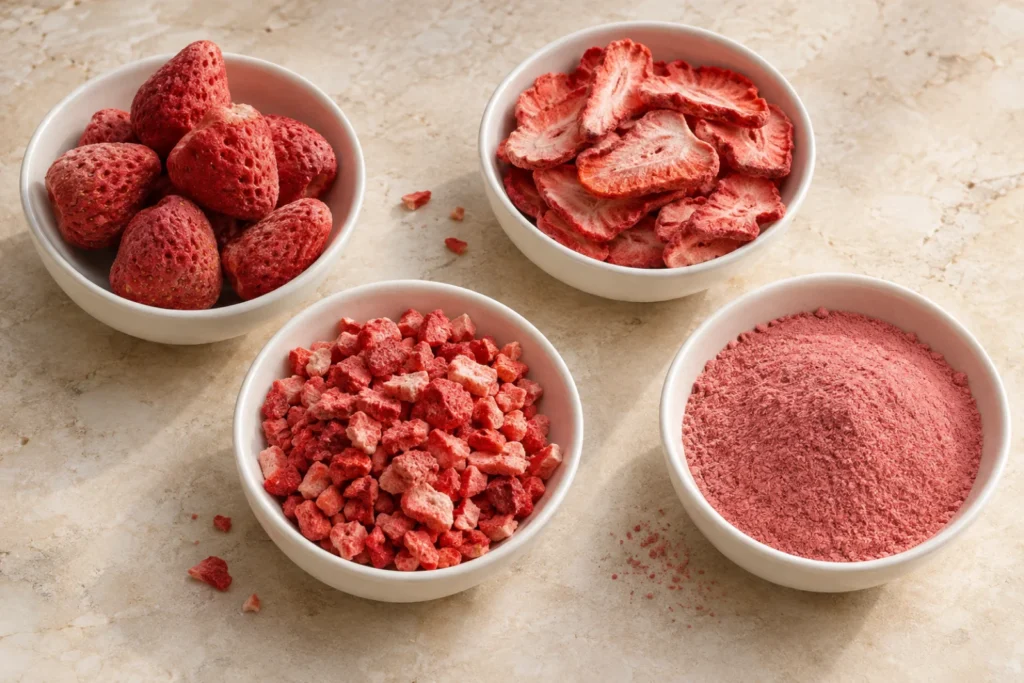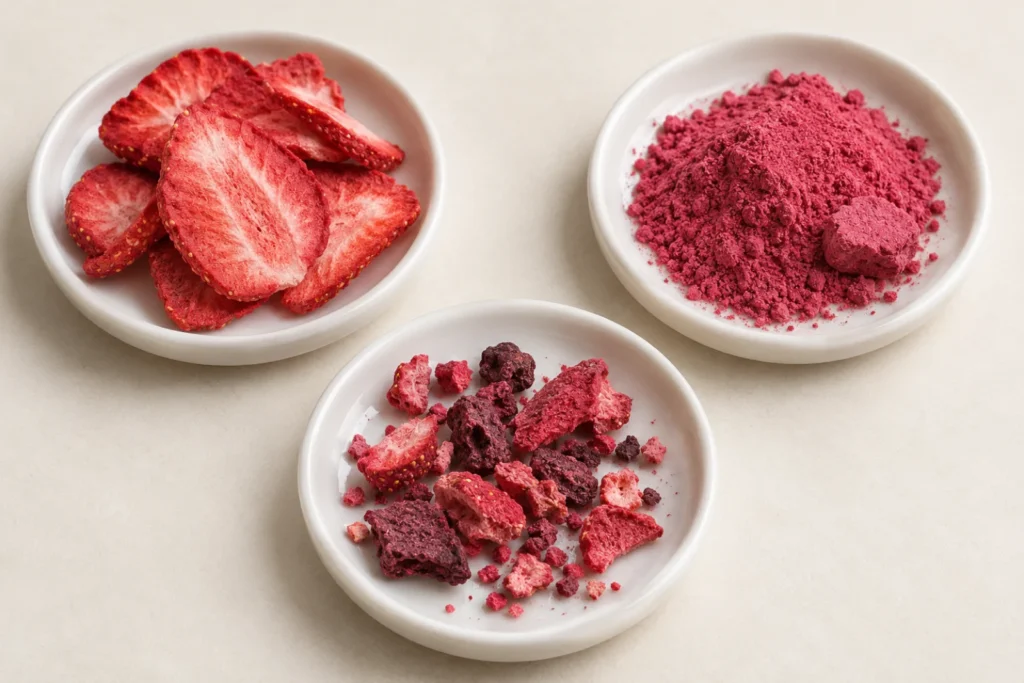
Soft fruit pieces, a solid lump of fruit powder and excessive fragments in a carton are different problems. They may involve moisture exposure, temperature, handling, product specification or more than one cause.
For manufacturers, the useful response is to identify when the change appeared and compare evidence from the incoming ingredient, production process and retained samples. A photograph can document a symptom, but it rarely establishes the cause on its own.
Softening often calls for a moisture investigation
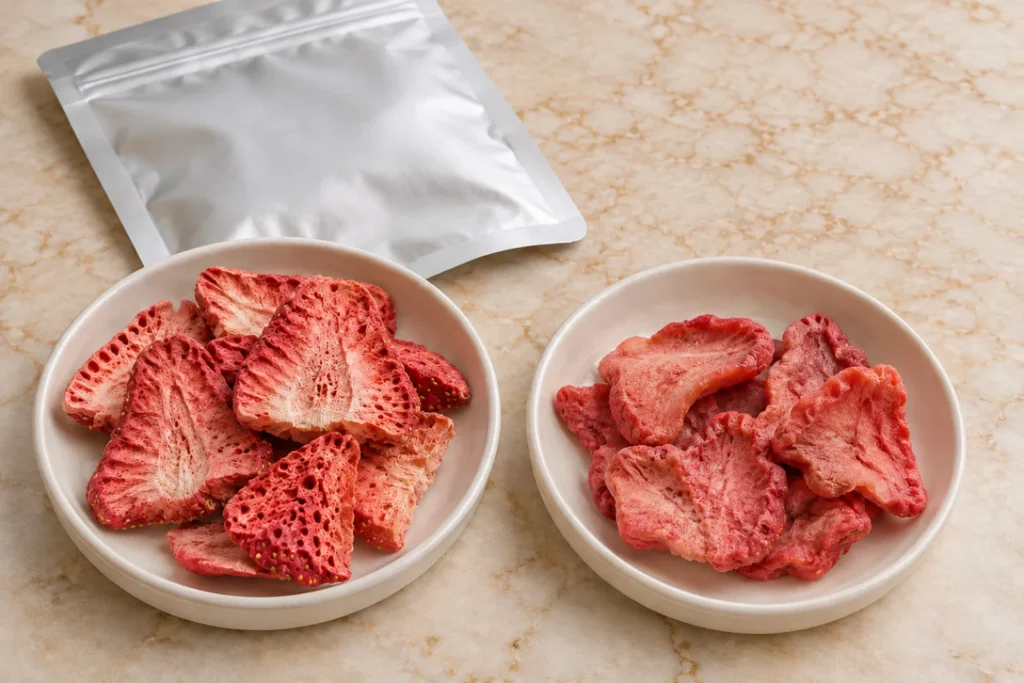
Freeze-dried fruit has a porous structure and can lose its intended crispness as it takes up water. Possible routes include humid air during use, compromised seals or contact with another ingredient in the recipe.
Check whether the issue was present in an unopened pack, appeared after opening or developed inside the finished food. Review moisture and water activity alongside the relevant specification and methods. A low value at dispatch does not show what happened later.
If a blended product softens while a retained ingredient sample remains acceptable, investigate the whole recipe and final packaging. That difference is useful evidence, not conclusive proof that any one party caused the problem.
Powder clumping has several possible causes
Humidity and temperature can affect the physical state of fruit solids, encouraging stickiness and caking. Composition, milling, particle size and storage conditions also influence behaviour. Research on freeze-dried fruit preparations describes these types of physical stability problems, but its results should not be treated as limits for every commercial powder. Study of freeze-dried orange preparations.
Distinguish a few loose agglomerates from a hard cake that interferes with weighing or blending. Record the severity, lot, pack condition and exposure history. Do not assume that milling the powder more finely will always improve flow, or add an anticaking ingredient without reviewing formulation and labelling implications.
Breakage needs a handling and specification review
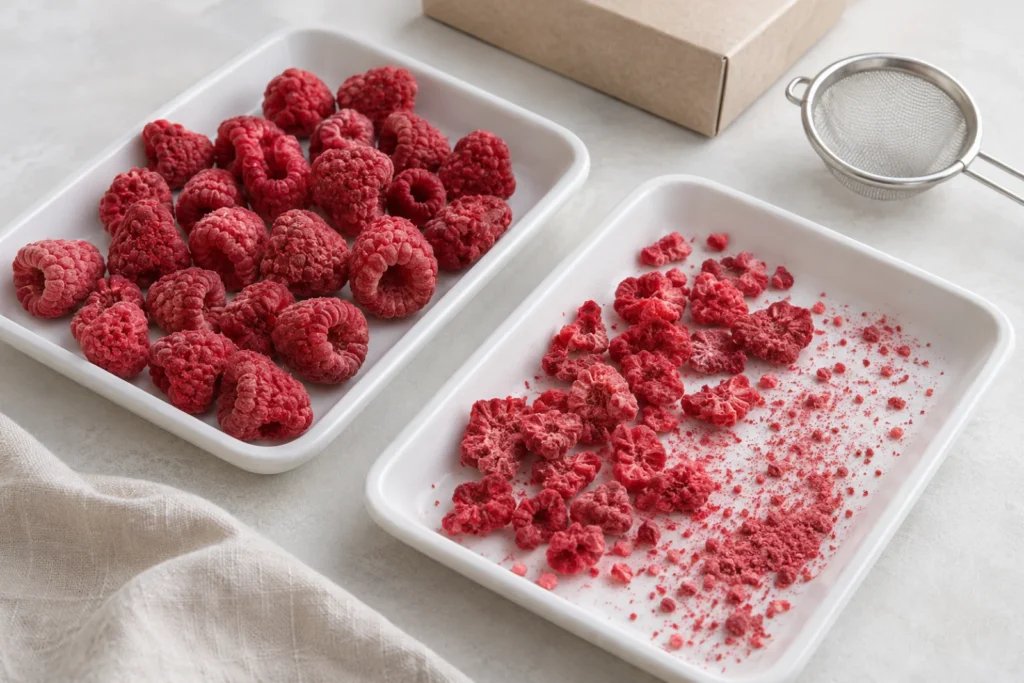
Whole berries and thin slices can fracture during transport, opening, mixing or filling. The acceptable level depends on the agreed product: crumble is a deliberate format, while the same fragments may be unacceptable in a whole-fruit specification.
Use a representative sampling method to measure intact pieces, fragments and fines. Review cut dimensions, bulk packaging, carton loading and transfer points. Compare condition before and after a relevant processing trial rather than relying on a hand-selected sample.
Where practical, inspect the effect of drop heights, mixer settings and time in handling equipment. A change that reduces breakage still needs checking for blend uniformity and production throughput.
Collect evidence before changing the process
A useful investigation record includes:
- Product, lot, pack identification and date received.
- When the pack was opened and how it was resealed.
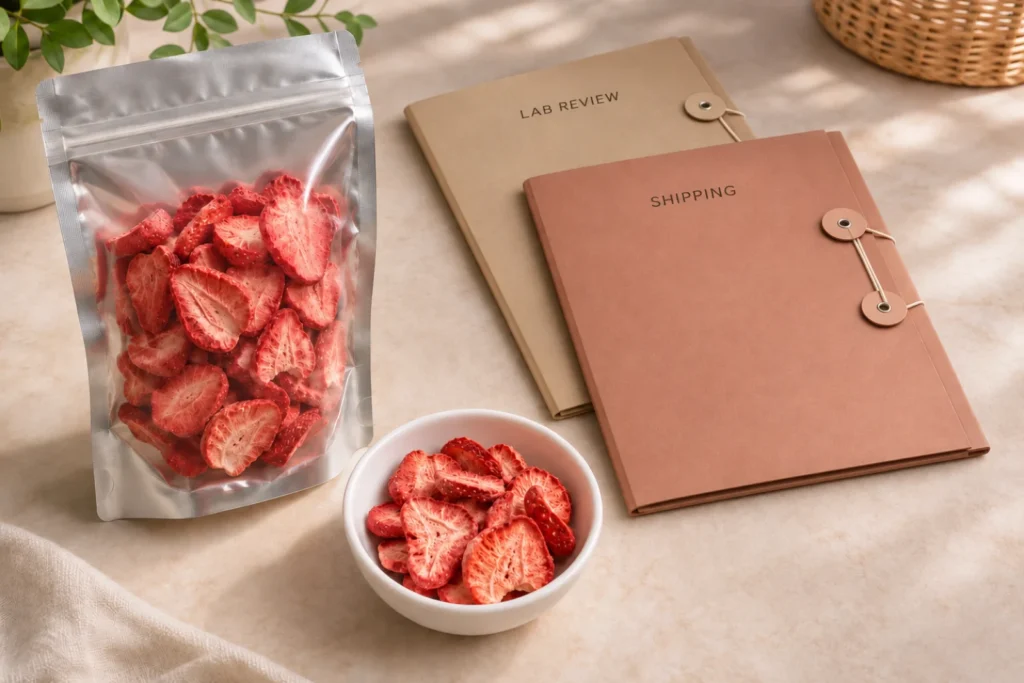
- Photographs of seals, packaging and representative material.
- Storage and production conditions where recorded.
- Agreed test results and sampling methods.
- Comparison with an unopened retained sample or another relevant lot.
Keep suspect material identifiable while deciding its disposition. Softening or caking alone does not establish a safety conclusion, and drying a material again does not demonstrate that it is safe or reset its shelf life.
Frequently asked questions
Does softness always mean the fruit was under-dried?
No. Insufficient drying is one possible issue, but later moisture exposure or interaction with other ingredients may also contribute.
Is every broken berry a quality failure?
No. Compare a representative sample with the agreed grade and limits. A whole-fruit specification and a crumble specification have different acceptance criteria.
Can a moisture absorber repair an affected lot?
Do not treat it as a repair or release decision. Assess the product condition, history and cause before deciding what is appropriate.
Share a documented quality enquiry
When contacting TIANQIN about a product issue, include the lot, packaging condition, handling history and representative evidence. These details help focus the investigation and identify which checks are needed.