Freeze-dried fruit needs protection from moisture during storage and use. A sound original pack helps maintain its condition, but the practical storage routine changes once a bag is opened, sampled or transferred into a production hopper.
For food manufacturers and bulk buyers, the starting point is the supplier's instructions for the specific fruit and packaging. There is no single opened-pack shelf life that applies to every product and handling environment.
Inspect and identify incoming packs
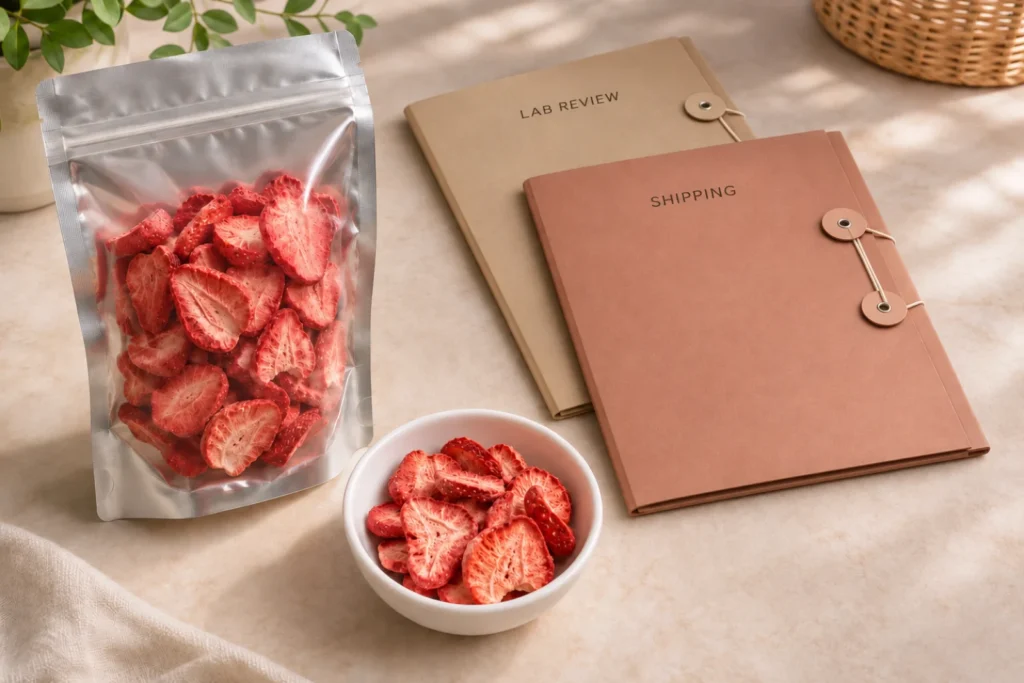
At receipt, check that inner bags and seals are intact, the outer packaging is in acceptable condition and lot identification is readable. Record damage or unusual product condition before the goods are mixed with other stock.
Follow the stated storage conditions, keep packs protected from water and physical damage, and use stock in an order that accounts for remaining shelf life. A carton protects against some handling damage, but it is not necessarily the main moisture barrier; inspect the sealed liner or pouch as well.
For general dry-food storage, Utah State University Extension highlights the importance of moisture protection and suitable packaging. Those principles do not establish a fruit-specific temperature limit or shelf-life claim. USU guidance on food-storage packaging.
Plan pack sizes around actual usage
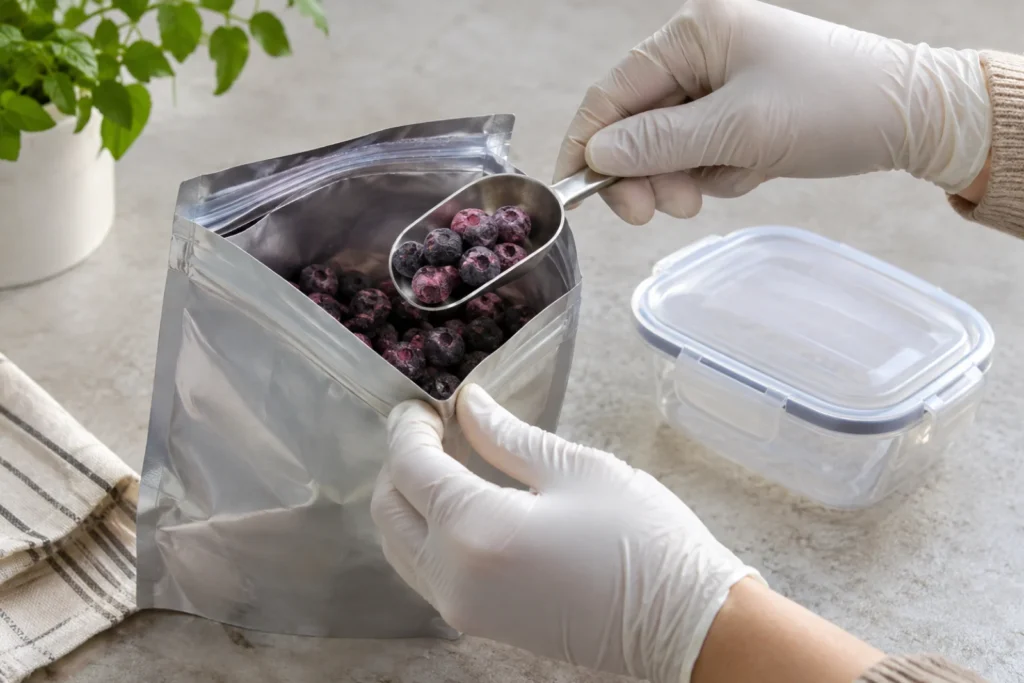
If a large bag is opened repeatedly to remove small quantities, the remaining fruit experiences repeated exposure to room air. Discuss smaller inner packs where they would suit the rate of consumption and reduce handling.
Before opening, prepare clean, dry utensils and an appropriate resealing arrangement. Remove only the quantity needed for the next operation, protect the rest promptly and retain its lot identity. If the material is transferred, label the new container with the relevant product, lot and opening information.
Control exposure during production

Include sampling, weighing, blending, milling and temporary hopper storage in the handling plan. A short period at each step can add up to substantial exposure before the final pack is sealed.
Check whether humid air, wet-cleaning activities or nearby steam can reach the ingredient. Do not assume that a closed-looking hopper or loosely folded liner provides the same protection as a properly sealed original pack.
For temperature changes, assess condensation risk before opening a cold package in a warmer, humid room. Follow a product-appropriate handling procedure rather than prescribing refrigeration as a universal solution.
Reseal using a suitable barrier
Use a closure and container appropriate for the intended remaining storage period. A zip closure can be convenient, but its performance depends on the pack and how it is used. It does not automatically restore the unopened pack's validated shelf life.
If the approved packaging contains a desiccant or oxygen absorber, follow the supplier's handling instructions. The two have different functions, and neither compensates for a leaking pack or replaces a sound food safety process. Do not add sachets or change the packaging arrangement without assessing suitability.
Establish an opened-pack use period
Ask for available guidance, then assess the actual process: pack size, room conditions, opening frequency, resealing and the intended application. The original best-before date alone does not establish how long an opened bag can remain in use.
Changes such as softening, caking, off-odours, visible mould or water ingress need an appropriate quality assessment. Appearance or a moisture reading alone is not a complete safety decision. Keep affected material identified and out of routine use until it has been assessed.
Frequently asked questions
Should all freeze-dried fruit be refrigerated after opening?
Follow the product instructions. Refrigeration is not a universal rule, and handling needs to account for condensation as well as temperature.
Can resealing restart the shelf life?
No. Retain the original dates and opening history, and use the agreed opened-pack procedure.
Discuss storage requirements when ordering
Tell TIANQIN how quickly a pack will be used and how the fruit will be handled. Request product-specific storage guidance and available pack options before setting your production procedure.