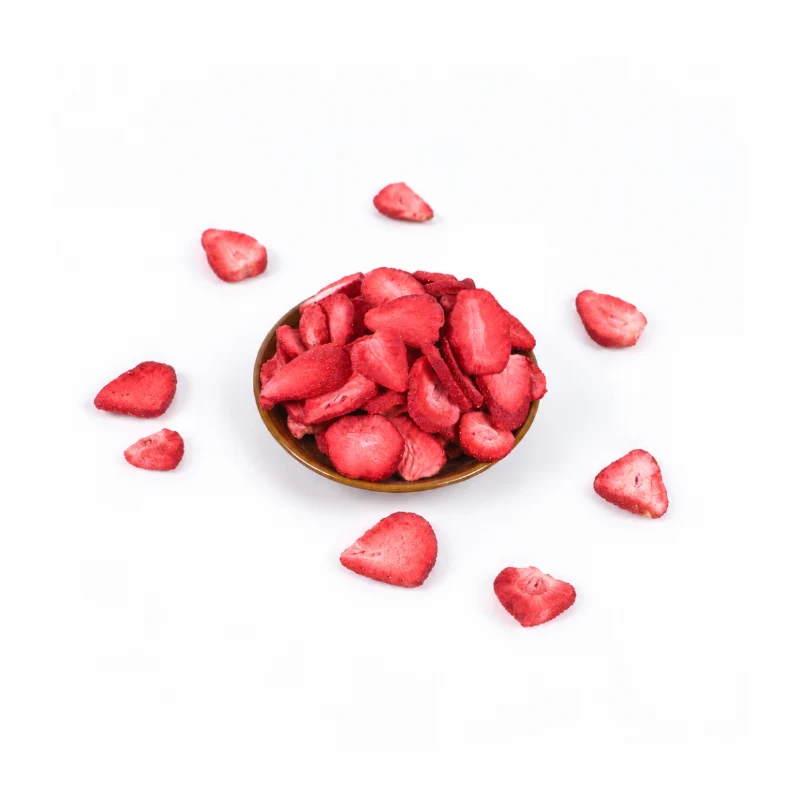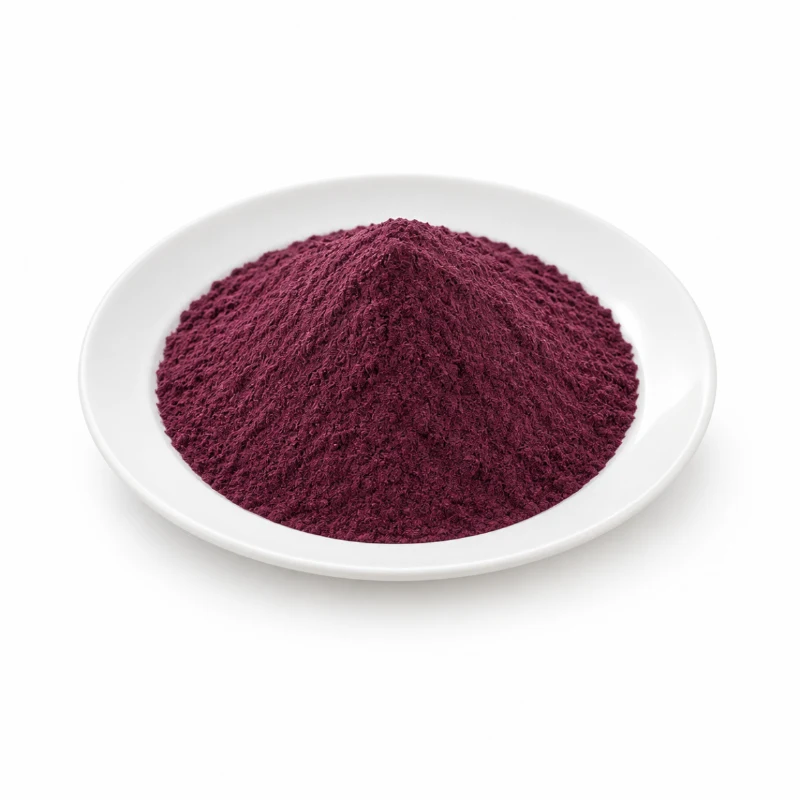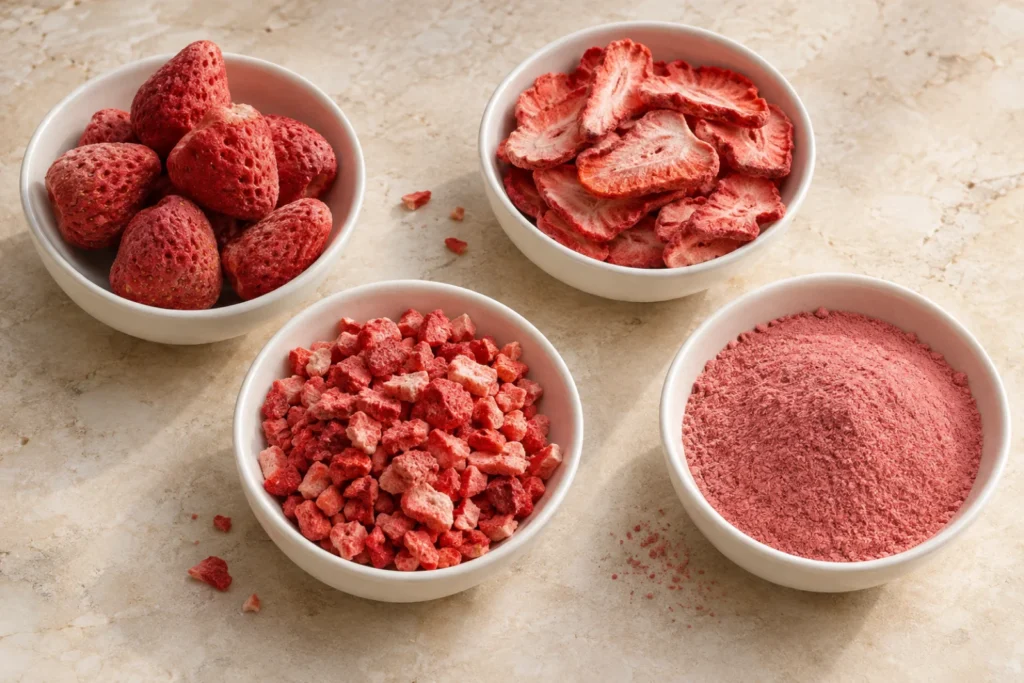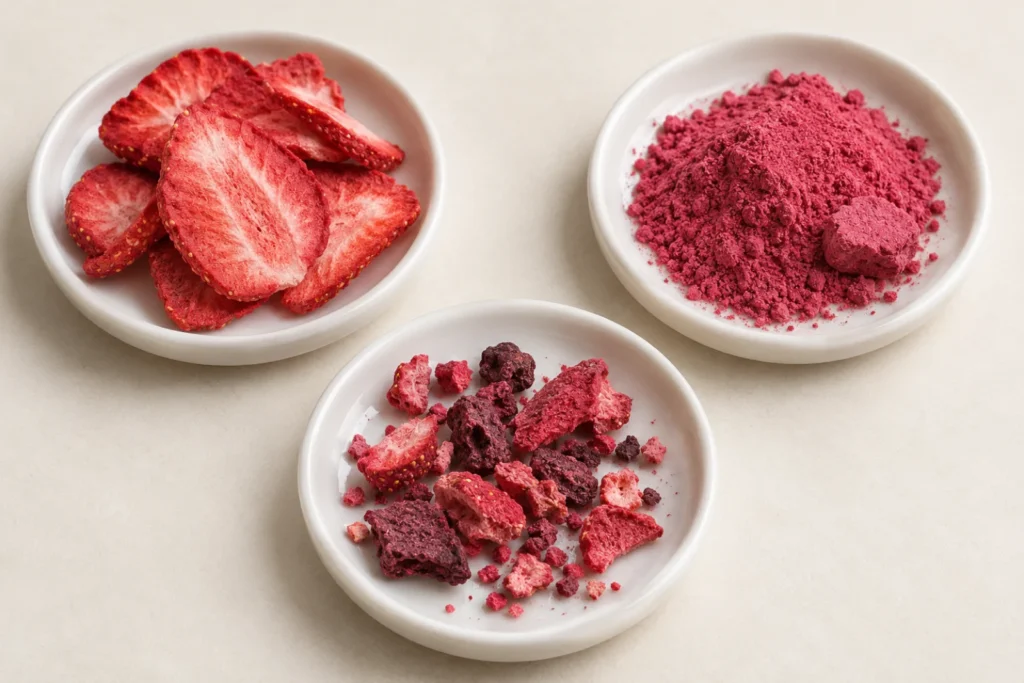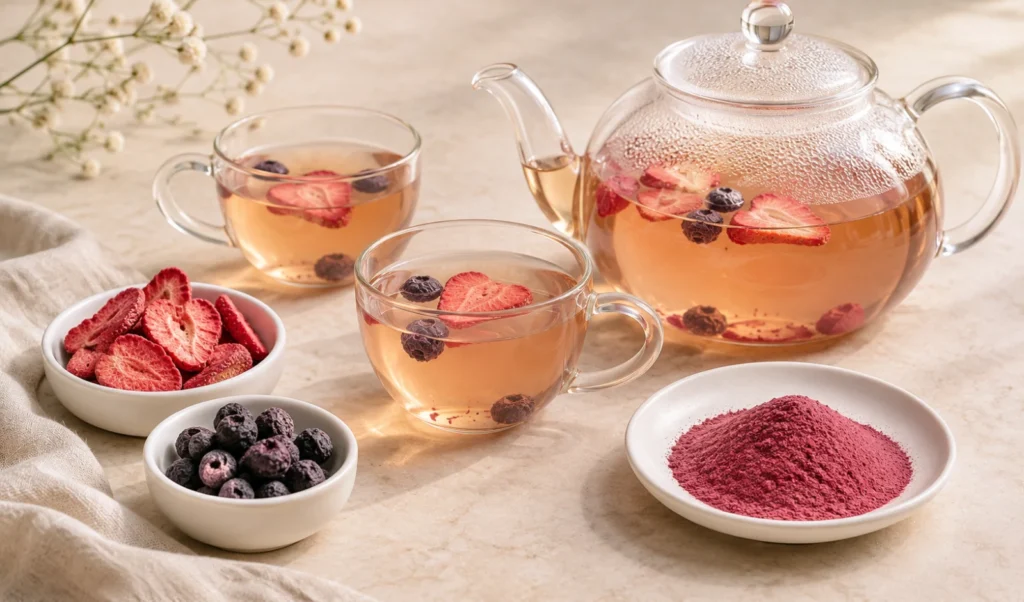
Freeze-dried fruit can contribute visible pieces, fruit flavour and colour to tea blends and beverage formulations. Its suitability depends on how the drink is prepared and consumed. A loose-leaf infusion, smoothie mix and bottled beverage place different demands on the same fruit.
Start by defining the required result in the cup or bottle, then compare formats under the intended preparation conditions.
Separate infusion, dispersion and dissolution
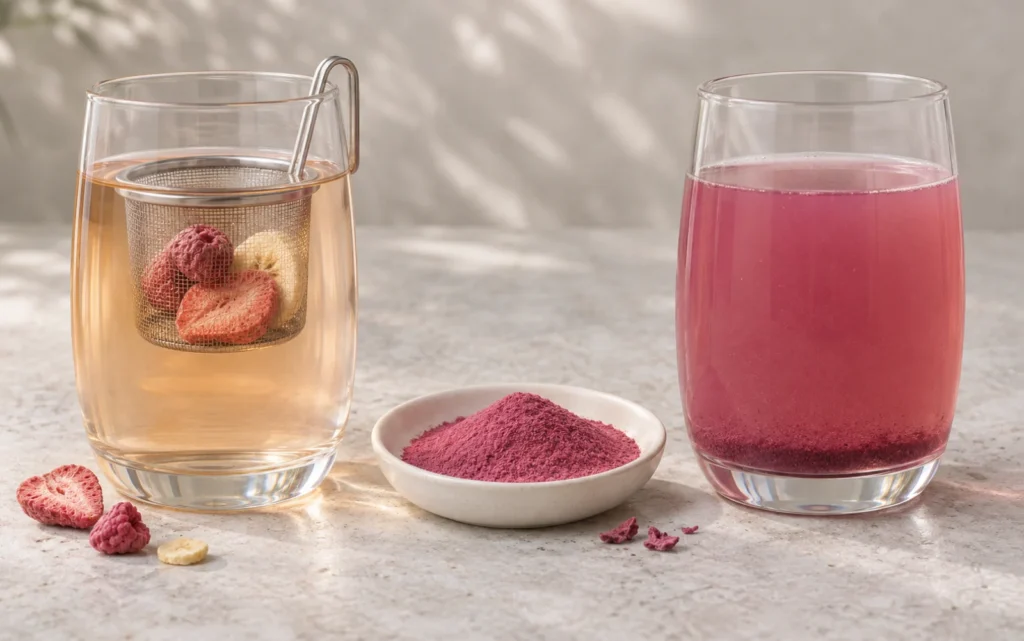
Fruit pieces absorb liquid and release some soluble components during steeping. This is different from dissolving the whole piece. Likewise, a whole-fruit powder can disperse in water while leaving fibre, skin or seeds suspended or settled at the bottom.
A clear drink with little sediment may need a different ingredient or additional processing from a cloudy, blended fruit drink. Finer milling can change mouthfeel and dispersion, but it does not turn insoluble fruit components into soluble ones.
Research comparing freeze-dried blueberry powders found differences in physical properties and solubility between preparation methods. Treat such results as a reason to test the proposed ingredient, rather than a specification for every fruit powder. Study of blueberry powder preparation.
Choose a format for the preparation method
For loose-leaf or bagged tea, assess piece dimensions, blend segregation and retention by the bag or infuser. Very fine material may escape into the drink, while large pieces may not suit the serving format.
For powdered drinks, assess particle-size distribution, clumping, dispersion time and sediment. Use the actual water temperature and mixing method described to the consumer. A laboratory blender can hide problems that appear when the customer stirs with a spoon.
For bottled drinks, evaluate the complete process, including any filtration, homogenisation, heat treatment and storage. A dry-fruit sample does not establish performance in a ready-to-drink product.
Test colour and flavour over time
Prepare comparison samples using the same fruit dose, water volume, temperature and contact time. Record aroma, taste, colour, floating material and sediment immediately and at relevant later intervals.
For tea, test the proposed steeping instructions. For cold preparation, test the actual cold process instead of extrapolating from hot water. For a stored beverage, check the formulation's pH, processing and package conditions as part of development.
Fruit colour and aroma can change during processing and storage. Avoid promising the appearance of fresh fruit or complete retention of its original aroma without product-specific evidence.
Specify the ingredient and handling conditions
Agree composition, format, particle size, moisture, water activity, packaging and the documentation appropriate to the final use. Clarify any carriers or pretreatments and the ingredient declaration they require.
Dry fruit can take up humidity during blending and repacking. Test how the ingredient performs after the expected handling period, not just immediately after opening the supplier's pack. Establish practical storage and resealing instructions.
Review safety in the final beverage process
Freeze-drying does not establish that an ingredient is sterile. Rehydration creates a different environment from dry storage, so the beverage manufacturer needs suitable food safety controls for its preparation and distribution process. The BCCDC discusses survival of pathogens in dried and freeze-dried fruit and vegetables. BCCDC food safety review.
Frequently asked questions
Will fruit powder make a clear instant drink?
Not necessarily. Request a sample and test sediment and mouthfeel under the intended mixing conditions.
Can a tea sample be used to approve a bottled beverage?
It can inform ingredient selection, but bottled-product processing and shelf-life trials are separate checks.
Discuss a beverage ingredient
Tell TIANQIN whether the product is steeped, stirred, blended or bottled. Include the serving conditions, preferred format and target market when requesting available options.